
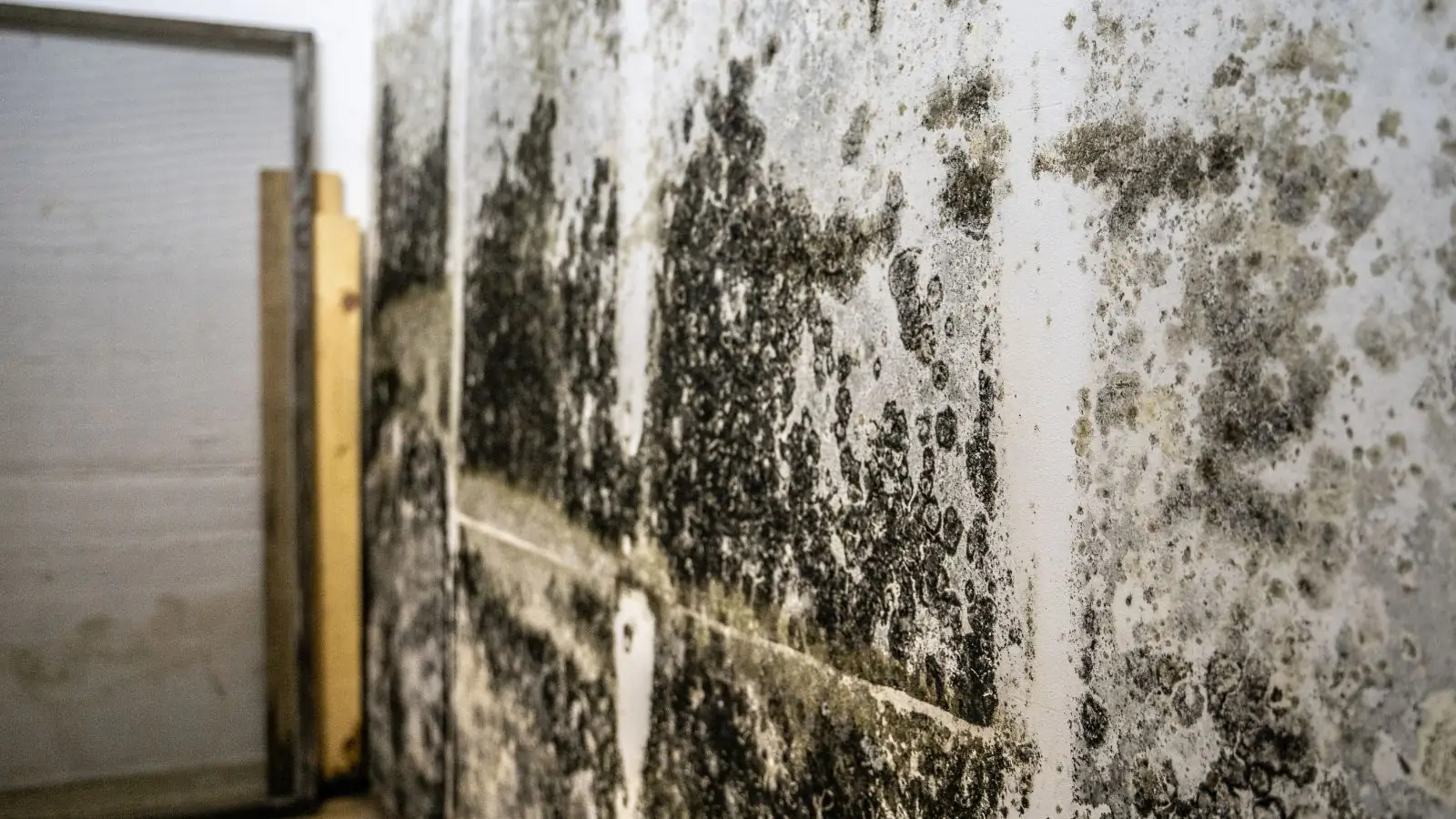
The short answer on basement mold
If the mold covers less than about 10 square feet and came from one leak that is already fixed, many homeowners can handle it. That is the rule of thumb in EPA guidance on mold cleanup. Larger areas, growth that keeps returning, or anything linked to floodwater or sewage belongs with a professional crew.
Whichever side of that line you land on, the order of work is the same. Stop the water, dry the space, then deal with the growth. Cleaning a wall that is still taking on moisture only resets the clock. If you cannot tell which case you have, call (385) 988-9410.
Find and fix the water source first
EPA guidance puts it plainly: moisture control is the key to mold control. A basement has plenty of ways to stay damp. Check for a weeping supply line, a leaking water heater base, a clogged window well, a sump pump that has stopped, a dryer vented indoors, or a foundation wall that seeps after heavy rain.
Run your hand along the bottom of the walls and behind stored boxes. Press on drywall near the floor, because soft or cool spots often mark a wick of moisture. A pro uses a moisture meter and a thermal imaging camera to trace where the water actually travelled, which is often not where the stain is showing.
Restoration is not waterproofing. If water keeps coming through the foundation, a drainage or waterproofing contractor is the right trade, and the mold work follows once that is solved.
DIY or hire a pro: a decision guide
Use this as a first sort. Your situation may sit between two rows.
| Situation | DIY reasonable? | Why |
|---|---|---|
| Under about 10 sq ft, one fixed leak, hard surfaces | Often yes | Fits the EPA homeowner note, and the cause is known and small |
| Growth on drywall, carpet or insulation | Usually no | Porous materials hold moisture and often must be removed, not wiped |
| More than about 10 sq ft | No | EPA guidance points to professionals for larger areas |
| Came back after you cleaned it | No | The moisture source is still active or was never found |
| Sewage or floodwater involved | No | Contaminated water calls for a professional response |
| A lender or buyer wants documentation | Hire a pro | A written scope and a separate clearance step are easier to show |
A general guide, not a diagnosis. Questions about mold and your health belong with a physician.
If you clean a small patch yourself
Keep it simple and keep the rest of the house out of it.
Stay safe while you work: wear gloves, eye protection and a well-fitting respirator, keep the area closed off from the rest of the house, and turn off the furnace fan so spores are not pushed through the ducts. Stop and call a professional if the growth is large, keeps coming back or you feel unwell.
- Wear an N95 respirator, gloves and eye protection.
- Close the door to the room and keep the furnace fan off while you work.
- Scrub hard surfaces with detergent and water, then dry them completely.
- Bag any removed porous material before carrying it through the house.
- Do not paint over stained or damp spots, and do not mix cleaning chemicals.
If the patch is back within a few weeks, stop scrubbing. That pattern means the moisture source is still active.
What containment and HEPA filtration mean in plain words
Containment is a sealed work zone built from plastic sheeting with a zippered door, so disturbed spores do not drift into the rest of the house. A negative air machine pulls air out of that zone through a HEPA filter, which captures very fine particles. Crews wear respirators and protective suits, remove or clean materials according to the written scope, HEPA-vacuum the surfaces and dry the area.
Crews working to ANSI/IICRC S520, the published Standard for Professional Mold Remediation, follow a defined sequence like this one. You can ask any company whether its crews work to that standard. Our mold remediation service page explains how a job is scoped here.
Not sure how big the problem is?
Describe what you see and a crew lead walks you through next steps, with scope and price explained before work starts. Call (385) 988-9410.
Snowmelt, sprinklers and basements in Payson
Payson City runs a separate pressurized irrigation (PI) system with about 5,000 connections that operates roughly from spring to fall. The city's 2023 flood-preparation letter says high water generally peaks from mid-May to mid-June, and it noted snowpack at the Payson Canyon SNOTEL site at 253 percent of normal in April 2023.
If your home has a basement, those weeks overlap with sprinklers running near the foundation. Check window wells, downspout extensions and grading before the season, then look at the basement walls after heavy melt or watering. A damp spot caught early is a drying job. Left for months, it becomes a mold job.
Source type: Payson City Public Works website and Payson City 2023 flood-preparation letterLender or home-sale clearance
Some lenders and buyers ask for proof that mold was addressed before a sale closes. What they accept varies, so ask your agent or lender what they want in writing.
Testing and remediation are separate decisions, and many people prefer that the party who tests is not the party who does the work. A written scope, photos, moisture readings and a post-work check make the paper trail easier to build. If the basement also had a water event, our water damage cleanup page covers the drying side.
Basement mold questions homeowners ask
EPA guidance centers on controlling moisture and removing the growth, not on spraying a chemical and walking away. Bleach on porous material does nothing about the dampness that feeds it. Never mix bleach with other cleaners.
EPA guidance says homeowners can often handle areas under about 10 square feet. Past that size, or on drywall, carpet or insulation, a professional scope is the safer route.
Testing and clearance are separate decisions from removal. A test tells you what was sampled, not how to fix the moisture problem. Ask whoever scopes the job to explain why they would or would not test.
Yes. Our crews are based at 39 N Professional Way in Payson and also serve Spanish Fork and Salem. Call (385) 988-9410 and describe the address.
Snowmelt raises the odds that water reaches a foundation during the weeks when high water peaks, and PI sprinklers add to it from spring to fall. Mold needs a damp surface to grow. If your home has a basement, watch for new damp spots in those weeks.
It depends on the cause. Sudden and accidental water damage is often covered, while gradual leaks and neglect often are not, and flood usually needs separate flood coverage. Check your policy and ask your insurer. We help document the damage with photos, moisture readings and an itemized scope.
Musty smell or visible growth in your basement?
Call (385) 988-9410. Calls are answered 24/7 and we offer same-day response when available.