
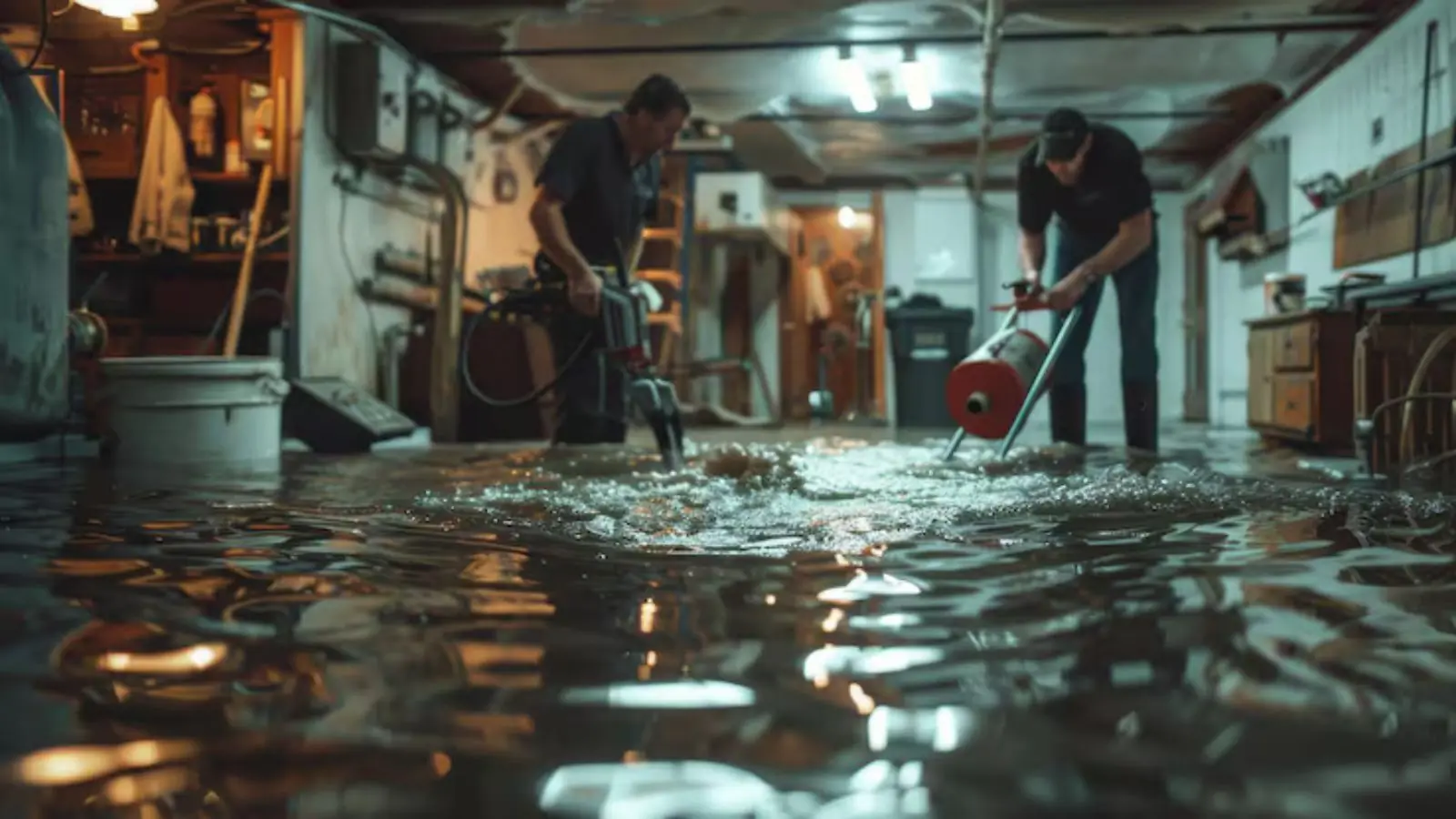
Pumping out standing water before it spreads
Emergency water removal is the pump-and-extract stage of a water loss. Crews pull standing water out of a home with extraction units, submersible pumps and wet vacs before it wicks into drywall, subfloor and framing. If water is on your floor right now, call (385) 988-9410. The line is answered 24/7, and a same-day response is arranged when available.
While you wait, stop the source, shut off the main water valve, switch off power to wet areas only if that is safe, lift valuables off the floor and keep people and pets out of any contaminated water.
Standing water right now: what to do before the pumps start
A few calm steps on your end save material later. Work through these in order and stop at any step that does not feel safe.
Before the crew gets there
- Stop the water. Close the fixture shutoff or the main water valve. If a supply line is spraying, the main valve is the one that matters.
- Bleed the lines. Once the main is closed, open a faucet at the lowest level so the pipes drain instead of leaking.
- Check the power. Turn off breakers for wet rooms only if the panel is dry and you can reach it without stepping in water.
- Lift what you can. Move rugs, electronics, books and small furniture to dry ground. Leave heavy furniture where it stands.
- Photograph everything. Take wide and close shots of the water line, the source and damaged items for your claim.
- Call the 24/7 line. Tell the crew lead how deep the water is, which rooms are wet and what you think caused it.
Electrical and gas come first
Stay out of any water that reaches outlets, cords, appliances or an electrical panel. Call 911 or the utility for any electrical, gas or fire risk before you call us. Water that came up from a drain is sewage, so keep out of it completely.
Burst pipe water damage
A burst pipe keeps pouring until the supply is shut off, and the volume adds up fast. Find the main shutoff, close it, then open a low faucet to relieve pressure. That one move often decides whether crews are pumping a puddle or an inch of water across a whole level.
Pipes fail in predictable spots: under sinks, inside exterior walls, in unheated crawl spaces and at the supply lines on water heaters and washers. About 36 percent of Payson homes were built before 1980 (Census ACS 2019 to 2023), so aging fittings are a real source of sudden failures. If your house is older, find the shutoff now.
After the line is closed, crews extract the standing water and then check wall and floor cavities with moisture meters and a thermal imaging camera, since water from a wall or ceiling rarely stays where it first shows. Sudden and accidental pipe bursts are often covered by homeowners policies, so photograph the damage and check your policy.
Crawl spaces and whole-house flooding
Water in a crawl space goes unnoticed because nobody looks down there. A broken irrigation line is a real scenario: pressurized irrigation can push a large volume through a failed fitting, and a leak near the foundation can fill the space while the lawn looks fine. A cold floor or a musty smell is your cue to check the access hatch.
Crews run submersible pumps with a hose to a safe discharge point, then dry the joists and subfloor. When water covers most of a level, several extraction units work at once. Groundwater and storm water change what can be saved, which is the territory of flood damage restoration.
Two water systems, two shutoffs
Payson City Public Works runs culinary drinking water and a separate pressurized irrigation system of about 5,000 connections that operates roughly spring to fall. When water shows up in a yard or crawl space, knowing which system it belongs to tells you which valve to close. If the house main does nothing, look for the irrigation shutoff.
Source type: Payson City Public Works website and Utah Division of Water Resources planThe equipment that gets the water out
Extraction units
Portable and truck-mounted units pull bulk water from carpet, pad and hard floors faster than any household tool.
Submersible pumps
Used when water is deep, such as a basement or crawl space. A hose carries it to a safe discharge point.
Wet vacs
Handle thin films, corners, stairs and spots the larger units cannot reach.
Air movers and dehumidifiers
They follow the pumps. Extraction removes liquid water, and drying equipment handles the moisture left in materials.
How much water, where it sits, and what is done first
| Situation | Where the water is | What is done first |
|---|---|---|
| An inch or more of standing water | Finished basement or ground level | Power checked, then submersible pump and extraction units, then carpet pad pulled if soaked |
| Water under the house | Crawl space | Supply or irrigation line shut, submersible pump with hose, insulation and subfloor checked |
| Most of a level covered | Several rooms | Multiple extraction units at once, contents lifted, water category identified |
| Brown water from a drain | Floor drain or toilet | Stay out, treat as Category 3, and move to a sewage scope with protective gear |
Every job is scoped on site, with scope and price explained before work starts. There is no arrival-time promise, but calls are answered 24/7.
Water still on the floor?
Call (385) 988-9410 any hour. Tell the crew lead what you see and get a plan for the next step.
Pump it out or dry it yourself: the honest trade-offs
A wet vac and a few box fans can handle a small spill on a hard floor, and that is a reasonable do-it-yourself job. The trouble starts with carpet, pad and wall bottoms, which hold water long after the surface feels dry. EPA guidance says to dry wet materials within 24 to 48 hours to head off mold, and household fans rarely get you there.
Professional extraction moves the bulk water out quickly, but pumping alone does not dry a house. Think of it as step one. Soaked contents and materials come next, which is covered under water damage cleanup, and structural drying equipment runs for days afterward.
Choose pro extraction when water is more than a puddle, touches drywall or insulation, or has gone somewhere you cannot see.
Professional water work follows the published ANSI/IICRC S500 standard, which defines the water categories and damage classes and sets how drying is monitored. Ask any company you call how it applies S500 to your job.
What affects the cost of water removal
Price depends on the scene, not a flat rate. These drivers are explained before work starts.
- Water category 1, 2 or 3, since contaminated water needs protective gear and different disposal
- How much area is wet and how deep the water stands
- Materials involved, such as carpet and pad, hardwood, drywall or insulation
- Equipment needed and the number of drying days
- How much rebuild is needed once the structure is dry
Sudden and accidental water damage is often covered by homeowners insurance, while gradual leaks and neglect often are not. We help document the loss with photos, moisture readings and itemized notes, and your insurer decides coverage. Check your policy.
Want your real number? Call (385) 988-9410.
Emergency water removal questions
Yes. The line at (385) 988-9410 is answered 24/7, including nights, weekends and holidays. When you call, describe the water and the crew lead sets up a same-day response when available. Standing water does not wait for office hours, and neither does dispatch.
Surface water starts wicking into drywall, baseboards and subfloor right away. EPA guidance says wet materials should be dried within 24 to 48 hours to limit mold. The longer water stands, the more material moves from dry-able to throw-away.
For a small clean-water spill, yes. For anything deeper than a puddle, rented gear often removes visible water and leaves wall cavities and subfloor wet.
Sudden and accidental damage is often covered, and gradual leaks often are not. Flood and drain backup usually need separate coverage. Check your policy and ask your insurer. The Utah Insurance Department's consumer guidance advises documenting damage with photos, keeping a call log and keeping receipts for temporary repairs.
Both. Extraction comes first, then air movers, dehumidifiers and moisture readings take over until materials are dry. That drying stage is described on the water mitigation page.
Serving Payson and the towns around it
Our address is 39 N Professional Way in Payson. Payson City's 2023 flood-preparation letter said high water generally peaks mid-May to mid-June, so window wells, sump pits and low basements get tested hardest then. Water at a basement wall in that stretch is your cue to call early.
We also take emergency calls for nearby towns, including Spanish Fork, which sits about 7 miles northeast of Payson.
Pumps are one call away
Call (385) 988-9410. The line is answered around the clock, and scope and price are explained before work starts.