
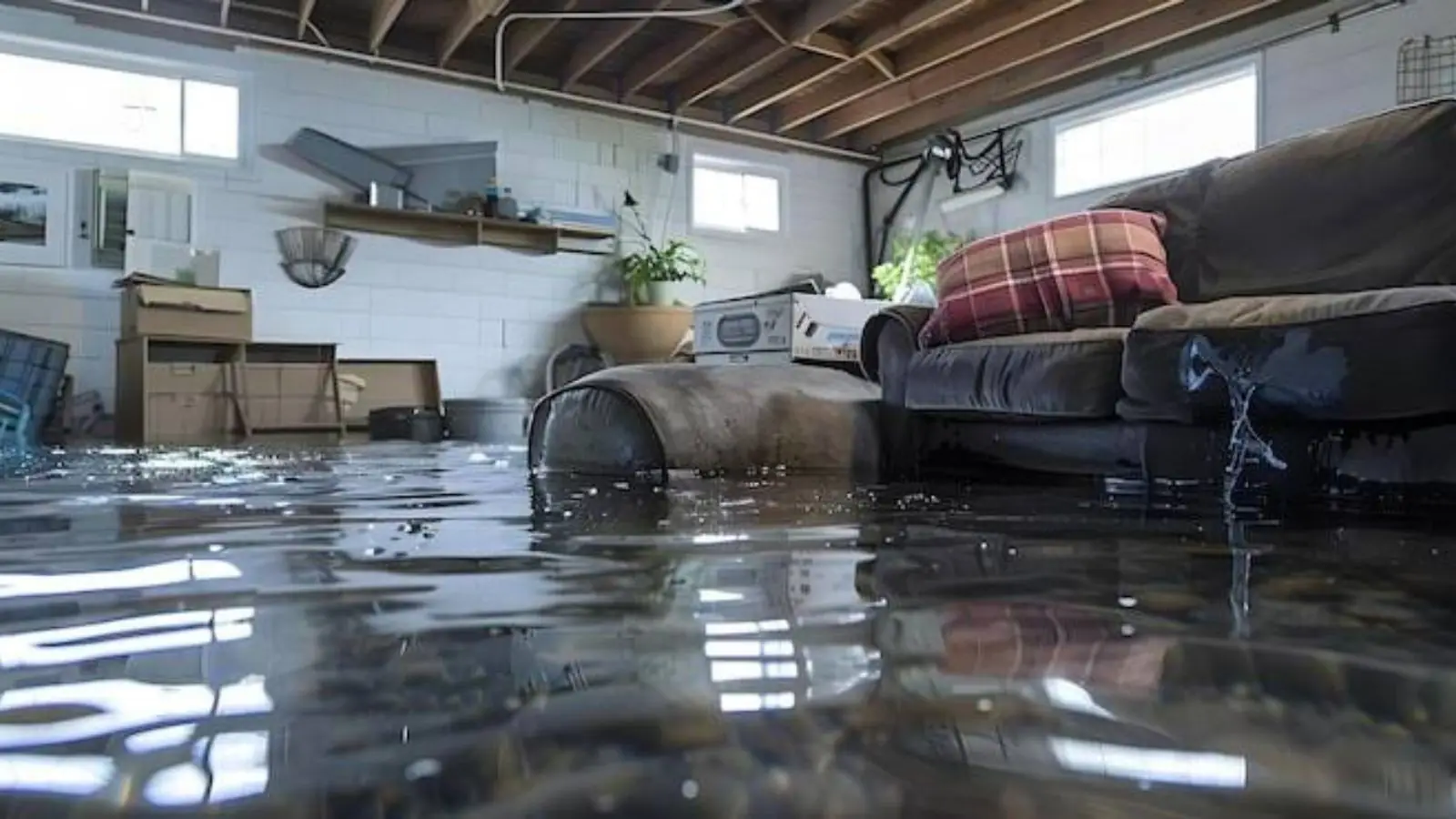
When floodwater gets into a Payson home
Flood damage restoration is the removal, cleaning and drying work after outside water enters a building: storm runoff, snowmelt, canal overflow, rising groundwater or a sewer line that backs up. Most of it is Category 2 or Category 3 water, so the job is different from a pipe leak. Call (385) 988-9410. The line is answered 24/7, and a same-day response is set up when available.
Until help arrives, shut off the main water valve if a pipe is involved, switch off power to wet areas only if that is safe, lift valuables out of the water and keep people and pets out of anything contaminated.
Water is coming up through the basement drain
Gurgling floor drains, a toilet that will not flush and brown water rising in a basement are signs of a sewer or drain backup. That is a different job from clean-up after a pipe leak, and it calls for protective gear and disposal of porous materials. The trade name for it is sewage cleanup, and it is a core part of flood damage restoration.
Safety first, then call
Stay out of any water near outlets, cords or an electrical panel. Call 911 or the utility for electrical or gas risk before you call us. Sewage means Category 3 water: keep children, pets and bare skin away from it and do not run the washer or flush fixtures until the line is checked.
Sewage backup cleanup
Sewage is Category 3 water under the ANSI/IICRC S500 standard. Anything porous it touches, including carpet, pad, insulation and lower drywall, is removed and bagged rather than dried. Hard surfaces are cleaned, disinfected and dried. Floor drains, shower pans and the area around the drain are checked for backflow, since water can travel under flooring.
Crews wear protective gear, extract the liquid, remove affected materials and run HEPA air scrubbers while the area dries. Furniture and contents are sorted, and most porous items that touched sewage are discarded. Because the source may be a blocked line, ask a plumber to clear it so water does not return. Scope and price are explained before the work starts.
Sewer or drain backup often needs an endorsement on a homeowners policy, so check yours before you call your insurer. Photos, a call log and receipts for temporary repairs help any claim. Mold can follow if wet material stays in place, which is a topic for the mold remediation scope.
Basement flooding cleanup
A flooded basement is usually a mix: groundwater or runoff seeping through walls and floor, sometimes with a failed sump pump, sometimes with a window well that overflowed. The first jobs are pumping the water out and finding where it entered. Note the water line on walls and take photos, because that line shows how high materials were soaked.
Crews extract with submersible pumps and extraction units, then remove carpet, pad and lower wall materials that soaked up outside water, since that water is Category 2 or 3. Concrete and framing are cleaned and dried with air movers and LGR and desiccant dehumidifiers. Moisture meters and thermal imaging show whether water went behind finished walls. Wet insulation and baseboards are replaced rather than dried.
Do not enter a basement with standing water if you cannot confirm the power is off. Once the water is out, soaked contents and materials move into water damage cleanup, and rebuild planning comes after the structure reads dry.
Active flooding: what to move and what to leave
Move small valuables, papers, electronics and medications upstairs. Leave heavy furniture, appliances and anything in deep water where it is. Take photos before you touch things, and keep a log of who you called and when. Pumping details are on the emergency water removal page.
Do not use a household vacuum on floodwater or walk through it barefoot. If water is rising outside your home, follow local officials and call 911.
What the 2023 runoff season means for your basement
Payson City's flood-preparation letter said crews cleaned the Dry Creek Channel, Peteetneet Creek and the debris basins, and that the Payson Canyon SNOTEL site showed snowpack at 253 percent of normal in April 2023. Peteetneet Creek comes down Payson Canyon into town. Cleaned channels reduce risk but do not remove it, so a home near a channel should still have a plan.
The same letter said high water generally peaks mid-May to mid-June and that sandbags were offered. In a heavy snow year, check window wells, grade and sump pumps before that window and ask the city about sandbags. A Utah Geological Survey item on 2023 Payson Canyon flooding and road failure is a reminder that runoff can also affect roads you rely on.
Source type: Payson City 2023 flood-preparation letter, NRCS SNOTEL data and Utah Geological SurveyWater source, category and what happens next
| Water source | Category | What happens |
|---|---|---|
| Sewer or drain backup | 3 | Extraction in protective gear, porous materials removed, surfaces disinfected, HEPA air scrubbing |
| Rising groundwater or seepage through slab or walls | 2 or 3 | Pumping, removal of carpet and pad, wall materials cut above the water line, structure dried |
| Storm runoff or snowmelt entering a window well or door | 3 | Extraction, soaked porous materials removed, soil and debris cleaned out |
| Failed sump pump with clean groundwater | 2 | Pump out, assess carpet and drywall, dry with air movers and dehumidifiers |
| Pipe burst inside the house | 1 at first | Handled as emergency water extraction, with the category reassessed as water sits |
Categories follow S500 vocabulary. The final category is set on site, and water that sits tends to move toward a higher one.
Water in the basement?
Call (385) 988-9410 any hour. Describe what you see and get a plan for the next steps.
Check the FEMA flood map and your flood coverage
Check the FEMA flood map for your address, and ask the Building Division at Payson City Development Services about anything near a channel. Most homeowners policies exclude flood, and FEMA FloodSmart says NFIP flood policies generally take 30 days to take effect. Payson City's flood letter says the same 30 days.
That wait means a policy bought after the creek is already rising will not help. If you want flood coverage, buy it well ahead of the runoff period. The Utah Insurance Department's consumer guidance notes flood is not covered by a standard homeowners policy and drainage backup is a common exclusion, so ask your insurer what yours covers.
Crawl spaces and whole-house flooding
Water in a crawl space from runoff or a broken irrigation line is easy to overlook. Submersible pumps clear it, and insulation, vapor barrier and subfloor are checked. When a whole level floods, several extraction units work at once and the category determines which materials are removed.
Restoration is not waterproofing
We dry and restore after water gets in. We do not stop it from getting in. If your basement floods because of grading, window wells, a cracked wall or a missing sump pump, that is a job for a waterproofing contractor, a landscaper or a plumber.
You can look up a contractor on the state's DOPL licence lookup. Fixing the entry point matters, because a restored basement floods again if the cause remains. The same rule holds for homes in Santaquin and the rest of our service area.
What affects the cost of flood restoration
Price follows the scene, and scope and price are explained before work starts. These are the drivers.
- Water category 1, 2 or 3, with sewage and floodwater needing the most removal
- Affected area and depth of water
- Materials involved, such as carpet, drywall, insulation and flooring
- Drying days and equipment on site
- Rebuild scope once the structure is dry
Flood damage is usually excluded from standard homeowners policies and needs separate flood coverage. Sewer or drain backup often needs an endorsement. Check your policy.
Want your real number? Call (385) 988-9410.
Flood damage questions
Yes. The line at (385) 988-9410 is answered 24/7, including nights, weekends and holidays. A same-day response is set up when available, and the crew lead explains safe first steps by phone.
Stay out, keep people and pets away and stop using sinks, toilets and the washer. Call 911 or the utility for any electrical or gas risk. Then call us for cleanup and a plumber for the blockage.
Usually not. Flood is typically excluded and needs separate flood coverage, which generally has a 30-day wait. Ask your insurer, and document damage with photos, a call log and receipts.
Mold needs moisture, so it becomes a risk when wet materials stay in place. Dry fast and remove contaminated porous materials. Mold work follows the S520 standard, and health questions belong with a physician.
No. Restoration cleans and dries after water enters. Waterproofing is a separate trade that tries to stop water from entering.
Floodwater or sewage in the house?
Call (385) 988-9410. The line is answered around the clock, and scope and price are explained before work starts.