
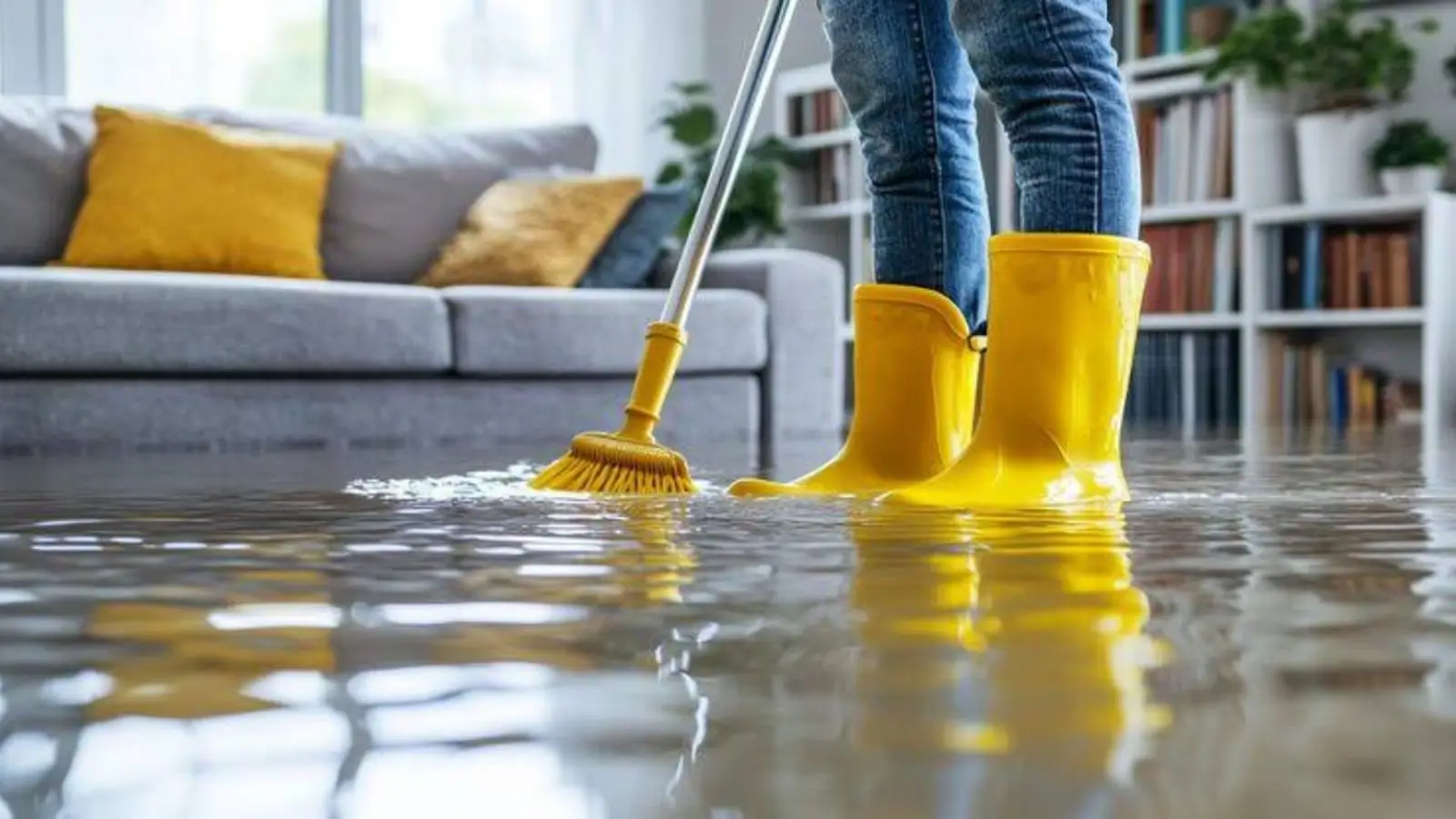
Cleanup begins when the water stops
Emergency water damage cleanup is the work that follows pumping: hauling out soaked debris, sorting what can be dried from what must go, then sanitizing and deodorizing what stays. Call (385) 988-9410 at any hour. The line is answered 24/7, and a same-day response is set up when available.
Until a crew is there, stop the source, shut off the main water valve, switch off power to wet areas only if that is safe, lift valuables and small furniture onto dry surfaces, and keep people and pets out of any contaminated water.
The first 48 hours decide what you keep
EPA guidance says to dry wet materials within 24 to 48 hours to limit mold. Here is how that window usually plays out.
Order of work in the first two days
- Right away. Photograph damage, remove standing water, pull soaked rugs and loose items, and identify the water category.
- Same day, when possible. Cut out and bag materials that cannot be saved, such as saturated pad and contaminated drywall.
- Day two. Set air movers and dehumidifiers on what remains, take moisture readings and apply antimicrobial treatment to cleaned surfaces.
Do not handle contaminated water bare-handed
Stay out of water near electrical panels or outlets, and call 911 or the utility for any electrical or gas risk before you call us. If the water came from a sewer or drain, or sat for days, treat it as contaminated and do not touch affected materials without gloves and boots.
Category 1, 2 and 3: the label that drives every decision
The ANSI/IICRC S500 standard sorts water by how contaminated it is. The category decides whether a porous material gets dried or discarded, so crews name it before any demolition starts.
Category 1, clean water
Comes from a supply line, a washer hose or a water heater tank leak. Most materials can be dried if caught early.
Category 2, gray water
Dishwasher or washer discharge, or clean water that sat too long. Carpet and pad usually go. Hard surfaces can be cleaned.
Category 3, black water
Sewage, rising floodwater, or standing water that has been contaminated. Porous materials such as carpet, pad, insulation and drywall are removed, not dried.
Clean water does not stay clean. A Category 1 leak that sits in warm, wet material can slide toward Category 2, which is one more reason to call early.
Material by material: dry it or throw it out
| Material | Salvage or remove | Why |
|---|---|---|
| Carpet pad | Remove in nearly every case | Foam holds water and is cheap to replace, and leaving it slows drying of the carpet above |
| Carpet | Dry in place if Category 1 and caught early, remove for Category 2 or 3 | Backing and fibers can be cleaned from clean water only |
| Drywall | Dry if only damp and clean, cut out if soaked, swollen or contaminated | Paper facing and gypsum crumble once saturated, and wet drywall feeds mold |
| Fiberglass insulation | Remove when wet from Category 2 or 3, often removed in walls even when clean | It holds water against framing and is inexpensive to replace |
| Upholstered furniture | Clean and dry for Category 1, discard for Category 3 | Cushion foam and fabric cannot be reliably decontaminated |
| Solid hardwood | Usually dry in place if started early | Boards absorb slowly, and drying mats and air movers can pull moisture back out |
| Tile, concrete and sealed stone | Clean and keep | Non-porous surfaces can be washed and sanitized |
Contents like photos and papers are handled case by case. Your insurer decides coverage, and we help document what was removed.
Not sure what is salvageable?
Call (385) 988-9410, describe the wet materials, and get a plain answer on what to expect.
Older Payson homes change the sorting
Census ACS figures put the median Payson home at 1994, but about 36 percent were built before 1980 and roughly 10 percent in 1939 or earlier. Older houses mean older flooring layers, plaster and insulation that you may not recognize. Before anything is torn out in a home that age, tell the crew when it was built so materials can be identified and handled the right way.
Source type: US Census Bureau American Community Survey 2019 to 2023Contents pack-out in plain words
Pack-out means moving belongings out of the wet rooms so they can be cleaned and stored dry while the room is opened up and dried. Items are sorted into three piles: clean and return, restore or deep clean, and discard. A written list and photos of each pile help with your insurance claim.
Electronics, books and fabric go first, because they absorb water and humidity fastest. Once the structure is dry, repair and rebuild work can begin and contents come home.
Sanitizing and antimicrobial treatment
After debris is out, surfaces are cleaned and an antimicrobial product is applied according to its label. This step does not replace drying. Mold needs moisture, so an area that stays wet will grow mold again no matter what was sprayed.
If you can already see mold, or wet materials sat for several days, the job may move to a separate scope under the S520 standard. Read about that on the mold remediation page, and ask any company whether its crews work to S500 and S520.
Odor control after a wet loss
Odor comes from wet material that is still there. Pulling soaked pad, insulation and drywall removes the source, and deodorizing products only mask what is left behind. Crews run HEPA air scrubbers and fans while materials dry, then re-check the smell once humidity drops.
A musty smell that returns after cleanup usually means moisture is hiding in a wall cavity or under a floor.
Washer valves, dishwashers and other appliance leaks
Appliance leaks are the quiet culprits. A washer supply valve can weep behind the machine for weeks, swelling the baseboard and lifting flooring before you see a puddle. A condensate line from an air handler can back up and soak a closet. An upstairs toilet can leak into the finished basement ceiling below.
Shut off the valve at the wall, unplug the appliance only if the outlet is dry, and photograph the area. Sudden and accidental discharge is often covered by homeowners policies, while a slow leak over months often is not, so check your policy.
Hardwood floors after a washer valve break
Hardwood cups when the bottom of a board absorbs water faster than the top. Specialty drying mats and air movers pull moisture out through the boards, and meters track progress over several days. Do not sand or refinish until readings are normal and the boards have flattened.
Some floors recover fully and some need replacing, depending on how long they stayed wet. Forcing a floor dry with heat can crack the boards.
What affects the cost of cleanup
Price follows the work, not a flat rate. These drivers are explained before work starts.
- Water category 1, 2 or 3, which sets how much material has to be removed
- The affected area and how many rooms are wet
- Materials involved, from carpet and pad to drywall, insulation and hardwood
- Drying days and the equipment on site
- The amount of rebuild once cleanup is done
Sudden and accidental water damage is often covered by homeowners insurance, and gradual leaks and neglect often are not. Check your policy. We help document the loss with photos, moisture readings and itemized notes.
Want your real number? Call (385) 988-9410.
Water damage cleanup questions
Yes. The line at (385) 988-9410 is answered 24/7, and a same-day response is arranged when available. Wet material does not get easier to save overnight, so after-hours calls are normal for us.
Carpet from a clean-water leak that is dried quickly can often be saved. The pad underneath usually cannot. If the water was Category 2 or 3, carpet is removed.
No. Clean, only-damp drywall can be dried in place. Saturated, swollen, stained or contaminated drywall comes out, and moisture readings tell the difference.
Items are moved out or lifted, sorted into return, restore and discard piles, and listed with photos. Porous items touched by Category 3 water are usually discarded.
Cleanup and drying overlap. Debris comes out first, then equipment runs until materials hit dry standards. The equipment side is covered under emergency water removal and the drying that follows it.
Sudden and accidental damage is often covered, and flood or drain backup usually needs separate coverage or an endorsement. Ask your insurer. The Utah Insurance Department's consumer guidance advises documenting damage with photos, keeping a call log and keeping receipts for temporary repairs.
Based in Payson, reaching the next towns
We work from 39 N Professional Way in Payson and take cleanup calls across the south end of Utah County. For homes in Salem, about 4 miles east-northeast, the process is the same.
Wet materials still in the house?
Call (385) 988-9410 any hour. The sooner the sorting starts, the more you keep.