
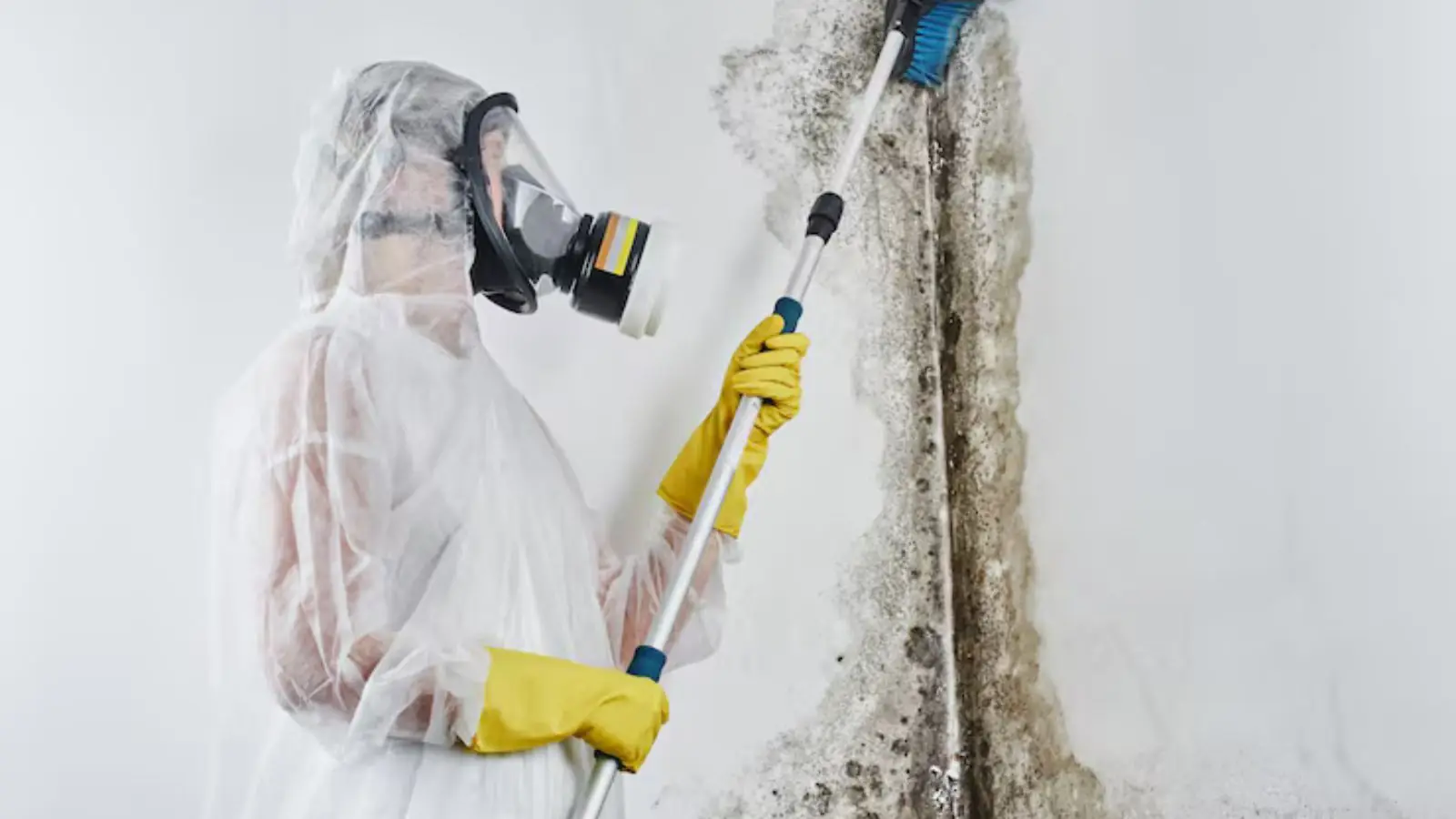
What mold remediation involves
Mold remediation in Payson, UT is the controlled removal of mold-affected material and growth from a building, paired with finding and correcting the moisture that let it grow. Mold needs moisture, which is why the water source always comes first. Professional work follows ANSI/IICRC S520, the published Standard for Professional Mold Remediation.
If water is actively leaking or spreading right now, stop the source if you safely can and call (385) 988-9410, 24/7. A crew lead walks you through next steps.
Musty smell, spots on a closet wall or a stain that keeps coming back: what is going on?
A musty smell with no visible source, dark spots on a closet wall, or a ceiling stain that returns after painting all point to the same thing: moisture is present somewhere it should not be. A wet spot in a closet is a common find, because closets are closed, cool and often share a wall with a bathroom, a water heater or an AC condensate line.
The trade that deals with this is mold remediation. A crew inspects the area, finds the moisture, contains the affected space, removes or cleans what is affected and dries the structure. Testing is a separate question, covered below. Health questions about exposure belong with a physician.
The leak has to be fixed before anything else
Mold almost always traces back to a recent leak: a toilet supply line, a sink drain, an AC condensate line that backed up, a roof leak or siding that let water into a wall. Until that source is repaired, cleanup is temporary.
EPA guidance says moisture control is the key to mold control, and that wet materials should be dried within 24 to 48 hours. Cleaning a surface while the leak continues only resets the clock. A plumber, roofer or HVAC tech fixes the source, and then the remediation crew seals off and cleans.
Signs that point to a moisture problem
None of these confirms mold on its own, but each is worth tracing to its source.
What to look for
- A musty odor. Strongest in closets, basements, crawl spaces and rooms that share a wall with plumbing.
- Dark or fuzzy spots. On walls, ceilings, baseboards or the underside of carpet and pad.
- A stain that returns. Repainted but reappearing, which means moisture is still reaching the surface.
- Warped trim or soft drywall. Material that has stayed wet long enough to lose strength.
Mold removal and black mold cleanup
Mold removal means taking out or cleaning affected material under controlled conditions. Porous items such as drywall, insulation and carpet pad with growth are usually cut out and bagged. Framing and other solid surfaces are cleaned by HEPA vacuuming and damp wiping, and sanded or wire-brushed only when needed.
'Black mold' is a popular name for dark growth, but color does not tell you what a growth is, and only a lab can identify types. For the cleanup itself, dark growth gets the same containment and removal steps as any other. What changes the job is the size of the area, the materials involved and whether sewage or floodwater was the water source.
Spraying a surface with bleach or a fogger is not a substitute for removal. The growth is feeding on the material, and porous material stays affected. Work to S520 means containment, filtration, removal, cleaning and verification.
How a remediation job runs
Steps in order
- Inspection and scope. A crew lead looks at the moisture source, readings and the extent of visible growth, then explains scope and price before work starts.
- Containment. Plastic sheeting and zip walls separate the work area so dust and spores do not travel into the rest of the home.
- Negative air and HEPA filtration. An air scrubber with a HEPA filter pulls air out of the contained area, keeping it at lower pressure than the rest of the house. In plain words, air leaks in toward the work area and not out of it.
- Removal and cleaning. Affected porous material is bagged and removed, and solid surfaces are HEPA vacuumed and wiped.
- Drying. Air movers and dehumidifiers bring the area to dry readings so the cleaned surfaces stay dry.
- Verification. A visual check and moisture readings confirm the work, and independent clearance testing is available if you or a buyer or lender want it.
Mold after water damage
Mold after water damage usually means the structure stayed wet too long, or part of it was never found. Hidden spots include wall cavities, under carpet pad, behind baseboards, inside cabinets and above ceilings under bathrooms.
The right order is: stop the water, dry the structure through water mitigation, inspect for growth, and then remediate where needed. Skipping the drying step means remediation gets done into a wet building.
If the source was sewage or floodwater, EPA guidance calls for professionals from the start, and flood damage restoration covers that stage. Mold coverage depends on your policy, so ask your insurer.
Mold testing, inspection and clearance
An inspection is a visual and moisture assessment: looking for visible growth, finding where moisture comes from and measuring wet materials. It shows where the problem is and what the scope of work should be. Testing means air or surface samples sent to a lab, and it is not always needed.
Independent clearance testing is done by a third party who does not do the remediation. It compares conditions after the work to a baseline, and it produces a document some buyers, sellers and lenders ask for. Whether a lender or buyer accepts a given report is their decision, so ask them what they require before you book anything.
Testing and remediation are separate decisions. You can remediate visible growth without testing, and a test result alone does not dry a wet wall.
DIY or professional: how to decide
EPA guidance suggests homeowners can often handle small areas, and larger or contaminated jobs call for professionals.
| Situation | DIY or professional | Why |
|---|---|---|
| Small spot on a hard surface, under roughly 10 square feet, cause found and fixed | Homeowner can often handle it | EPA guidance treats small, surface-level jobs as manageable. Wear protection and dry the area fully. |
| Area larger than roughly 10 square feet | Professional | Size calls for containment and proper disposal. |
| Growth on drywall, insulation or carpet pad | Professional likely | Porous material usually has to come out, and growth may extend past what shows. |
| Musty smell and no visible source | Inspection first | The source has to be found before anything is opened or cleaned. |
| Lender or buyer requires clearance | Professional plus independent tester | Remediation and testing are separate, and the report needs a third party. |
These are general guides, not rules. A crew lead can look at your situation and tell you which side of the line it falls on.
Not sure where to start?
Call (385) 988-9410, 24/7. Describe what you see, and a crew lead walks you through next steps. Scope and price are explained before work starts.
Crawl space and basement mold
Below-grade spaces hold moisture because soil, foundation walls and cool surfaces sit in contact with damp air. Common triggers are a leaking plumbing line, water entering at a window well or a poorly drained downspout, and a wet vapor barrier.
Remediation can clean framing and remove damaged insulation, but it does not stop water from entering. Restoration is not waterproofing. If groundwater or grading is the cause, a drainage or waterproofing contractor addresses that, and the two trades should work in the right order.
Snowmelt and older homes in Payson
NOAA 1991 to 2020 normals for the nearest stations show about 20.2 inches of precipitation and 66 inches of snow per year at Spanish Fork Power House, and about 18.4 inches and 55 inches at Santaquin Chlorinator. Snow piled against a foundation melts toward it, so check downspouts and grading after the melt.
About 36 percent of Payson homes were built before 1980 (Census ACS 2019 to 2023). Older plumbing makes slow leaks more likely, so look under sinks and around the water heater now and then.
Source type: NOAA NCEI 1991 to 2020 climate normals (nearby stations) and Census ACS 2019 to 2023 housing estimatesClean, remove or rebuild: the honest trade-offs
The right approach depends on the material and how far the growth reached.
Surface cleaning
Works on solid materials such as framing and concrete. It is quicker than removal. The trade-off is that it only holds if the moisture is fixed.
Removal and replacement
Needed for porous material with growth. More demolition and more rebuild, but it takes out what the growth was living in.
Monitoring afterward
After the work, watch humidity, plumbing and the repaired area. If moisture returns, growth can return too, so the check is part of the plan.
What drives the cost of mold remediation
Pricing follows the work, so these factors matter most:
- Size of the affected area. More surface means more containment, labor and disposal.
- Materials involved. Removing drywall and insulation costs more than cleaning solid framing.
- Water category behind it. Sewage or floodwater adds safety steps.
- Access and location. Crawl spaces, attics and tight basements slow the work and the equipment setup.
- Rebuild and testing. Replacing what was removed is a separate scope, and independent clearance testing is its own cost.
Mold coverage varies by policy and by the cause of the water, so check your policy. Want your real number? Call (385) 988-9410.
Mold questions from Payson homeowners
Closets trap damp air, and they often share walls with bathrooms, water heaters or AC condensate lines. Dark spots and a musty odor point to moisture, so the first job is finding the source. An inspection can trace it, and cleanup comes after the leak is fixed.
Fixing the leak is the right first step. If the material stayed wet beyond 24 to 48 hours, or you can see or smell growth, the affected area still needs inspection and possibly removal. Drying the structure comes before cleanup.
No. Paint hides a stain but does not remove growth or the moisture behind it, and the spot often comes back through the finish. Fix the water source, then have the area cleaned or the material removed.
They are separate decisions. Cleanup deals with visible growth and moisture. Testing is a lab sample, and it is mainly useful when you want documentation, a baseline or independent clearance after the work. A crew lead can explain which one fits your situation.
Ask the lender or buyer exactly what they require in writing. Often it is remediation, then an independent clearance test from a third party who did not do the work. Whether they accept a given report is their decision, so confirm before you schedule.
EPA guidance says homeowners can often handle areas under roughly 10 square feet, and larger jobs or those from sewage or floodwater call for professionals. Fix the moisture first, wear protection and discard porous material with growth.
Ask whether your state licenses mold work, and ask any company whether its crews work to ANSI/IICRC S520. You can also look up a contractor on the state's DOPL licence lookup.
Mold help for Payson and nearby towns
Calls come from Payson and the towns around it, including Santaquin homes about 5 miles south-southwest. Once cleanup and drying are done, water damage repair rebuilds whatever had to be removed.
Found mold or a damp spot?
Call (385) 988-9410. A crew lead walks you through next steps, and the scope and price are explained before work starts.