
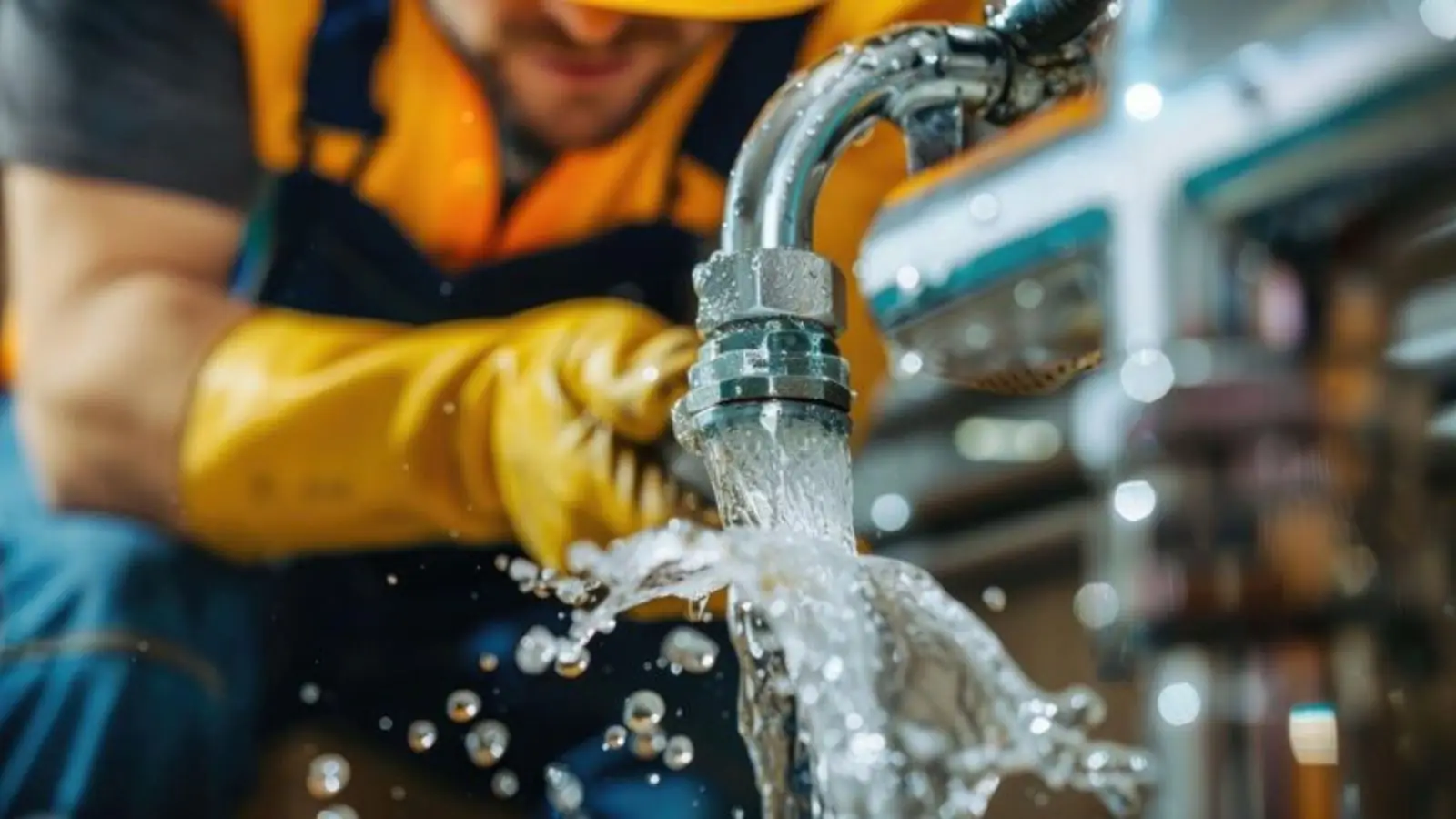
The first move is the main shutoff
Go to the main water shutoff valve and close it. Do that before anything else, because every minute the supply stays open adds water to the floors, walls and ceilings. If you do not know where the valve is, find it now, before you ever need it. It is usually where the water line enters the house, often in a basement, utility room or garage.
Once the water is off, open a faucet at the lowest point of the house to drain what is left in the lines. Then work through the checklist below and call an emergency water removal crew.
Water and electricity do not mix
If water is dripping near outlets, light fixtures or the panel, or you smell gas, leave the area and call 911 or your utility before calling us. Turn the power off at the main panel only if the panel is dry and you can reach it without stepping in water. Never touch switches or appliances while standing in a wet area.
Burst pipe steps, in the right order
Work down the list. Stop at any step that puts you near water and electricity together.
What to do first
- Shut off the main water. Close the valve fully. If the valve will not turn or is under the water, call the 24/7 line and your utility.
- Deal with the power. Turn off circuits to wet areas only if the panel is dry and safe to reach. Otherwise leave it and call 911 or the utility.
- Lift valuables. Move furniture legs onto blocks, lift rugs, electronics and papers to a dry room. Do not move wet drywall or insulation.
- Contain and catch. Use buckets under ceiling drips. Poke a small hole in a bulging ceiling only to drain it into a bucket if it is safe to stand there.
- Document. Photograph and video the pipe, the water and damaged items before cleanup. Keep receipts for temporary repairs.
- Call a crew. Call (385) 988-9410. Say where the water is and which floors it reached so the scope is clear.
Where a burst pipe hides
The loud ones are easy. Slow, hidden bursts cause more damage because nobody sees them.
| Location | What you notice | What to check |
|---|---|---|
| Under sinks | Cabinet floor swelling, musty smell, drip at the shutoff | Supply lines, the trap and the cabinet base with a flashlight |
| Behind walls | Stain or bubbling paint, warm or cool spot, a hissing sound | A moisture meter or thermal camera reads the wall without opening it |
| Ceilings under baths and kitchens | Brown ring, sag, drip | Open the ceiling only after the water is off and you have photos |
| Attic | Wet insulation, ceiling stains below | Supply lines on the cold side of the insulation |
| Exterior walls and garage | Frost, ice, stains near the line entry | Unheated runs closest to outside air |
A crew uses moisture meters and thermal imaging cameras to follow water to its source before deciding what to open.
What happens after the water is off
A crew extracts standing water with extraction units, removes wet material that cannot dry in place, and sets drying equipment. That means air movers to move air across surfaces and LGR or desiccant dehumidifiers to pull moisture from the air. Readings are taken daily until the structure meets its dry reference.
How long that takes depends on the materials and the area. Our water mitigation page explains the drying process, and the repair comes after the structure is dry, not before.
The trade standard for this stage is ANSI/IICRC S500. It sorts water into categories and damage into classes, and it expects moisture readings until materials are dry, so ask to see them.
Water still coming in?
Call (385) 988-9410, any hour. Calls are answered 24/7, and the scope and price are explained before work starts.
Thawing and preventing frozen pipes
If a pipe has frozen but not split, open the faucet so water can move as it thaws and warm the pipe slowly with a hair dryer or warm towels. Never use an open flame, a torch or a heat gun, because they start fires and can burst a weakened pipe. Keep the heat on and open cabinet doors so warm air reaches the plumbing.
For prevention, insulate lines in garages, crawl spaces and exterior walls and disconnect hoses from outdoor spigots. If you are leaving for a winter trip, keep the thermostat on and know where your main valve is.
Payson winters and the irrigation shutoff
NOAA's 1991-2020 normals for the nearest stations show about 66 inches of snowfall a year at Spanish Fork Power House and about 55 inches at Santaquin Chlorinator. Those are nearby-station figures, not a Payson reading. They do say winter is real here, so insulate exposed plumbing before it arrives.
Payson's pressurized irrigation system runs roughly spring to fall and is separate from drinking water. That means irrigation lines and outdoor spigots can freeze or burst in a different season than your indoor plumbing. Winterize the sprinkler side when the PI season ends, and check the garage or yard in spring before water comes back on.
Source type: NOAA NCEI climate normals and Payson City Public Works informationInsurance and a burst pipe
Sudden and accidental water damage, like a pipe that splits, is often covered by a homeowners policy, while slow leaks and neglect often are not. Check your policy and ask your insurer about your deductible and what counts as sudden. We help document damage with photos, moisture readings and an itemized scope of work.
The Utah Insurance Department's consumer guidance advises keeping a call log and receipts for temporary repairs, such as shutting off the main or renting a pump.
Neighbors face the same winters
The same freeze patterns reach Santaquin, where most homes are newer, and Springville, where the historic district has older homes with older plumbing. If your home was built before 1980, which describes about 36 percent of Payson housing per the Census ACS, ask a plumber about replacing aging supply lines.
Burst pipe questions
Usually where the main line enters the home, often in a basement, utility room or garage. Many homes also have a valve near the water meter.
Test it once a year so it turns when you need it.
Only if the panel is dry and you can reach it without standing in water. Never touch it with wet hands or while standing in water.
If you cannot do it safely, call 911 or the utility.
Open the faucet, keep the heat on and warm the pipe slowly with a hair dryer or warm towels. Never use an open flame.
If you cannot find the frozen section or a pipe has already split, shut off the main and call a plumber.
Sudden and accidental water damage is often covered, but gradual leaks are often not. Check your policy for specifics.
Document the damage with photos and keep receipts for temporary repairs.
Payson's pressurized irrigation system runs roughly spring to fall, so lines left full when it shuts off can freeze and crack in a cold snap.
Drain or blow out sprinkler lines and shut off the PI valve to your house before hard freezes. Ask Payson City Public Works about the shutoff date.
Often several days, longer for dense materials such as hardwood or plaster. A crew checks moisture readings daily.
Turning equipment off early can leave moisture trapped behind walls.
Need a crew for the water you cannot reach?
Call (385) 988-9410 and describe what you see. A crew lead walks you through next steps and scope before work starts.