
What decides the cost of crawl space mold work
Crawl space mold removal and treatment cost depends on how much area is affected, how hard the space is to reach, what materials are involved and whether the moisture source is fixed. No honest number exists until someone has been under the house with a moisture meter. This page gives no prices for that reason.
What it does give you is the list of drivers, the main treatment options and a way to compare quotes. Want your real number? Call (385) 988-9410 and describe the space.
The cost drivers, one at a time
Each of these changes the scope, and the scope sets the price.
Affected area
A few joists with surface growth is a smaller job than growth across the floor framing and subfloor. Measurements matter more than a quick look.
Access and working conditions
Low clearance, a small hatch and tight spots slow crews that must work on their backs or knees in protective gear.
Moisture source
Standing water, a leaking pipe, plumbing condensation or damp soil each need a different fix. Without one, the rest of the work is temporary.
Insulation and vapor barrier
Wet batts and torn ground sheeting often have to come out, and replacing them adds to the scope.
Containment and air control
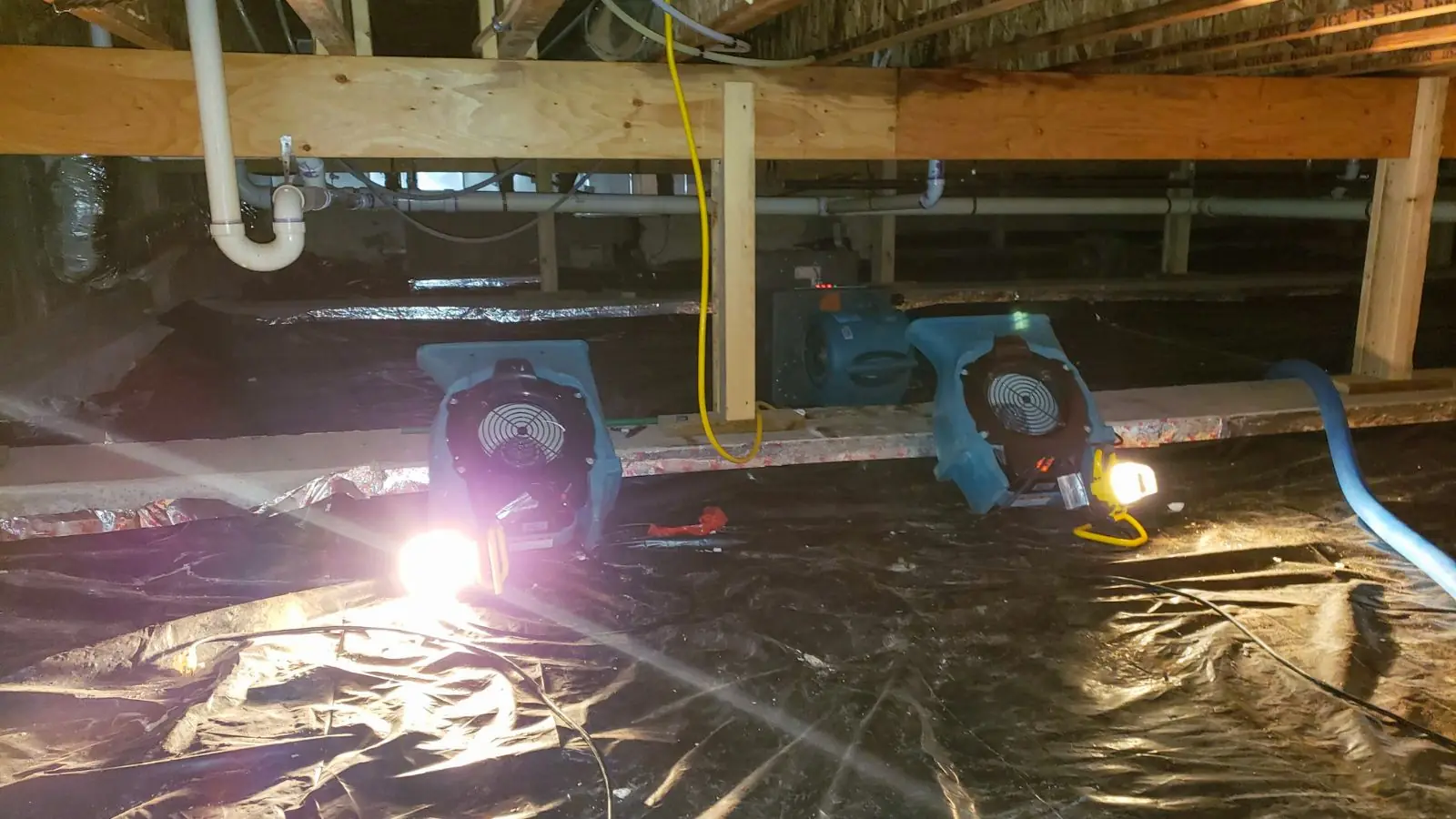
Sealing the crawl space off and running HEPA air filtration protects the living area. It takes setup and equipment.
Drying and testing
Dehumidifiers and air movers need days to run, and any testing or clearance step is a separate line item.
Treatment options and their trade-offs
Crawl space mold is usually handled in one of a few ways. The right mix depends on the material and how deep the growth runs. Crews working to ANSI/IICRC S520, the published Standard for Professional Mold Remediation, can explain how their method follows that standard. You can ask any company whether its crews work to it, and our mold remediation page describes how a scope is built.
Cleaning and HEPA vacuuming
Wire brushes, scrapers and HEPA vacuums can clean structural wood with surface growth. It is the lowest-impact option, but it only works when the wood is sound and the moisture is controlled.
Removing affected materials
Wet insulation, rotted or deeply colonized wood and torn vapor barrier come out and get bagged. This costs more up front and often costs less than cleaning something that cannot be cleaned.
Drying and moisture control
Drying removes the condition mold needs. Dehumidifiers dry the air, and a ground vapor barrier slows moisture rising out of the soil. A vapor barrier is moisture control, not a mold cure.
Cleaning versus removing: how to decide
| Condition found | Often points to | Cost effect |
|---|---|---|
| Light surface growth on sound joists | Clean and dry | Lower scope, limited materials |
| Wet or compressed insulation | Remove and replace | Adds disposal and new material |
| Torn or missing ground barrier | Repair or replace barrier | Adds materials and labor |
| Rot or soft framing | Structural repair beyond mold work | Carpentry may be a separate trade |
| Standing water or active leak | Fix source first | Plumber or drainage contractor first |
Findings vary from home to home. A written scope should say which row your crawl space is in.
Want a scope you can compare?
A crew lead can walk you through what the work would involve, with scope and price explained before work starts. Call (385) 988-9410.
Fix the moisture first, or the money is wasted
EPA guidance calls moisture control the key to mold control. Remediating a crawl space with a dripping pipe or wet soil only buys time. Growth can return when the same conditions come back, and no one can promise otherwise.
Restoration is not waterproofing. If groundwater or surface runoff enters, a drainage or waterproofing contractor addresses that, and our water mitigation crews handle drying after a water event. A good quote lists the moisture source and who is expected to fix it.
Sprinkler season and runoff around Payson crawl spaces
Payson City's pressurized irrigation (PI) system serves about 5,000 connections and runs roughly from spring to fall. Its water comes from sources that include the Strawberry High Line Canal and Payson Canyon flows. The city's 2023 flood-preparation letter says high water generally peaks from mid-May to mid-June.
If your home has a crawl space, that stretch is when sprinklers and runoff most often meet your foundation. Aim spray away from the walls, keep grading sloped away, and check the crawl space after a heavy week. Catching wet soil early lowers the scope and the cost of any later work.
Source type: Payson City Public Works website, Utah state water plan and Payson City 2023 flood-preparation letterWhat a fair scope looks like
Ask for a written scope that covers these points.
Quote checklist
- Measured area. Square footage affected and how it was measured.
- Moisture source. What is feeding the growth and who fixes it.
- Method by material. What is cleaned, what is removed and why.
- Containment and filtration. How the crawl space is sealed off and which air equipment runs.
- Drying plan. Equipment, monitoring and how dry is confirmed.
- Testing and clearance. Whether it is included and who performs it.
- Replacement scope. Insulation, barrier or wood repair, listed separately.
Compare quotes line by line, not by the bottom number. A lower figure with fewer lines often leaves out the moisture fix or the clearance step.
Comparing quotes without being pushed
Two quotes should describe the same work before you compare prices. If one covers drying and the other does not, they are not the same quote. Ask each company how it handles containment and what happens if the moisture is not resolved.
We serve crawl spaces in Spanish Fork and Santaquin as well as Payson. Insurance may cover sudden and accidental water damage but often not gradual issues, so check your policy and ask your insurer.
Crawl space mold questions
It depends on the affected area, access, materials, the moisture source and the drying and clearance steps. We do not quote prices in articles. Call (385) 988-9410 and describe the space.
The words overlap. Removal usually means taking out growth or contaminated materials. Treatment can mean cleaning, drying and moisture control. A scope should say what is cleaned, removed and dried.
A ground vapor barrier reduces moisture rising from the soil. It helps control the conditions mold needs, but it does not clean existing growth or fix leaks.
Testing and clearance are separate decisions. A scope based on a visual and moisture assessment is usually the starting point. Ask the company why it would or would not recommend testing.
Spring through fall, when PI sprinklers run, and during the mid-May to mid-June peak the city describes for high water. If your home has a crawl space, check it after heavy watering or runoff.
Air can move between a crawl space and the living area. That is why containment matters. For questions about mold and your health, talk to a physician.
Ready to get your crawl space scoped?
Calls are answered 24/7 and we offer same-day response when available. Call (385) 988-9410.