
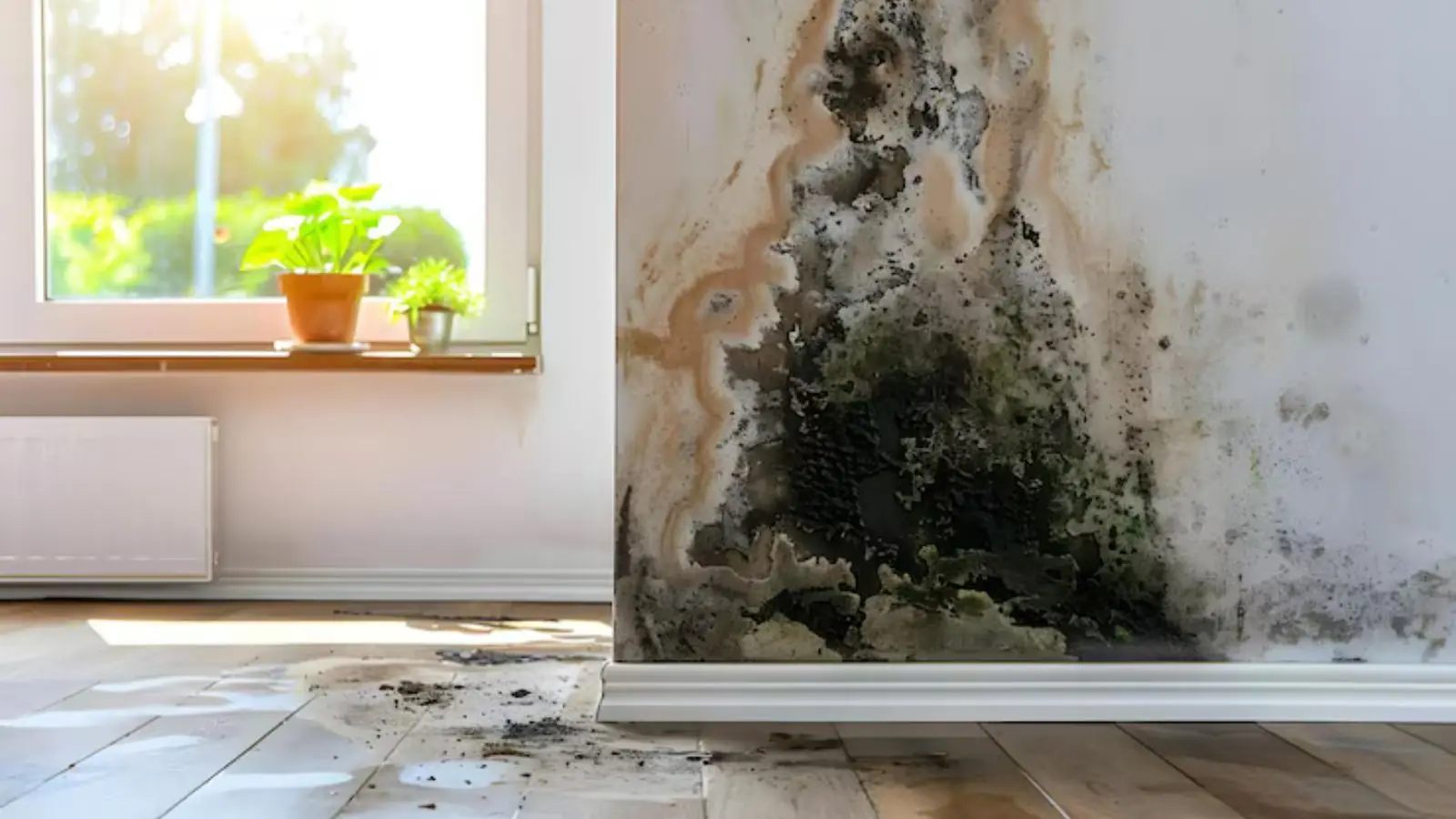
How fast mold can start after a flood
Mold needs moisture, so the clock starts when materials get wet and stay wet. EPA guidance says to dry wet materials within 24 to 48 hours to prevent growth. After that window, wet drywall, carpet pad and insulation become likely places for it to take hold.
That is a risk, not a certainty. Fast extraction, removal of materials that cannot dry and steady dehumidification can keep it from starting. The practical goal is to get water out and the structure dry before the window closes.
Why floodwater makes it harder
Floodwater from outside is usually Category 2 or 3 under the ANSI/IICRC S500 standard, because it picks up soil, runoff and sewage on the way in. Contaminated water soaks into porous materials and cannot be cleaned out of them, so those materials generally come out instead of being dried in place.
Clean Category 1 water, such as a supply line break, gives you more room to save materials. Floodwater does not. That is why a flooded basement is a different job from a leak under a sink.
What stays and what must go
This is the usual outcome after a flood, with exceptions based on how long things stayed wet.
| Material | Usual outcome | Why |
|---|---|---|
| Carpet and pad | Removed | Soaks up contaminated water and holds it |
| Drywall and insulation | Cut out above the water line | Cannot be cleaned and dries slowly in the wall cavity |
| Particleboard and cheap cabinetry | Discarded | Swells and falls apart when wet |
| Solid wood framing | Cleaned and dried | Dense, and can be dried and checked with moisture meters |
| Concrete | Cleaned and dried | Hard and non-porous at the surface |
| Stored cardboard, books, soft goods | Discarded | Absorbent and hard to clean |
A crew confirms each item with moisture meters and a walk-through before deciding.
What to do while you wait for help
These steps protect the structure and your claim.
Before the crew arrives
- Stay safe first. Stay out of water near outlets or the panel. Call 911 or the utility for electrical or gas risk.
- Document everything. Photograph and video the water line, damage and ruined items before anything is moved.
- Lift what is dry. Move dry belongings to a clean room. Leave soaked porous items for the crew.
- Ventilate if it is safe. Open windows only if outdoor air is drier and the area is safe. Don't run fans across contaminated water.
- Keep records. Keep a call log and receipts for temporary repairs, as the Utah Insurance Department's consumer guidance advises.
- Call a crew. Call (385) 988-9410 so extraction and drying can start inside the window.
Water is out but the walls are still wet?
Call (385) 988-9410 and describe the rooms and the wet materials. A crew lead walks you through next steps, and scope and price are explained before work starts.
Drying versus remediation: which one do you need
If everything was caught early and materials dry to their reference readings, simple drying is enough. That is the goal of flood damage restoration. If visible growth or a musty smell shows up in materials that stayed wet, remediation may be needed.
Remediation follows the ANSI/IICRC S520 standard for professional mold remediation. It involves containment, removal of affected materials and cleaning with HEPA air scrubbers, and the water source must be fixed first. Testing and clearance are separate decisions, and you can ask the crew how they handle them. EPA guidance says homeowners can often handle growth under about 10 square feet, but larger or floodwater-related jobs call for professionals. Our mold remediation page covers it in depth.
Payson's 2023 runoff and the irrigation season
The Payson Canyon SNOTEL site showed snowpack at 253 percent of normal in April 2023, and Payson City's flood-preparation letter said high water generally peaks mid-May to mid-June. Crews cleaned the Dry Creek Channel, Peteetneet Creek and debris basins, and the city offered sandbags. Flood insurance takes 30 days from purchase to become active.
The tie-back is timing. Spring runoff and a wet basement can arrive in the same weeks, and the pressurized irrigation system also starts roughly in spring, so a leaking valve or line can add water to a place that is already damp. Dry out after a flood, then check irrigation connections before the season starts.
Source type: Payson City flood-preparation letter, NRCS SNOTEL data and Payson City Public Works informationWhat to document before anything is thrown out
Photograph the water line on each wall, the depth markings on furniture and every item that will be discarded. Write down what each item was and roughly when you bought it. A crew adds moisture readings, a map of wet areas and an itemized scope.
Keep a few small samples of ruined flooring or drywall if your insurer asks for them, and ask before you haul everything to the curb.
Flood coverage is separate
Most homeowners policies exclude flood, per FEMA FloodSmart, and NFIP flood policies generally take 30 days to take effect. If you only added coverage recently, ask your insurer when it began. We help document damage with photos, moisture readings and an itemized scope of work.
A lender sometimes requires mold to be cleared before a sale. If that applies to you, keep drying logs and ask the remediation company what documentation they provide.
Nearby towns, same water
Spring snowmelt also affects homes in Santaquin, where the city described record snowpack in 2023, and in Springville, where the city noted high snowmelt in spring 2023. Any home that sits near a creek channel should be checked for moisture after high water.
Mold after flooding questions
EPA guidance says to dry wet materials within 24 to 48 hours. If they stay wet after that, mold becomes a risk.
Speed of extraction and drying is the main control.
Drywall that sat in floodwater is usually cut out above the water line because it cannot be cleaned or dried reliably. A crew checks moisture readings.
Keep photos of the wet drywall for the claim.
EPA guidance says homeowners can often handle areas under about 10 square feet, but larger areas or sewage and floodwater jobs call for professionals.
Fix the water source first.
Testing and clearance are separate decisions from remediation. Ask the crew what they recommend and what documentation they provide.
Ask whether your state licenses mold work.
Payson City's 2023 flood letter said high water generally peaks mid-May to mid-June. A wet basement then needs drying right away.
Check your sump pump and window wells before the peak.
Most homeowners policies exclude flood, and flood coverage takes about 30 days to start. Check your policy.
Mold coverage depends on the cause and the policy, so ask your insurer.
Flooded in Payson?
Call (385) 988-9410, any hour. A crew lead walks you through next steps, with scope and price explained before work starts.