
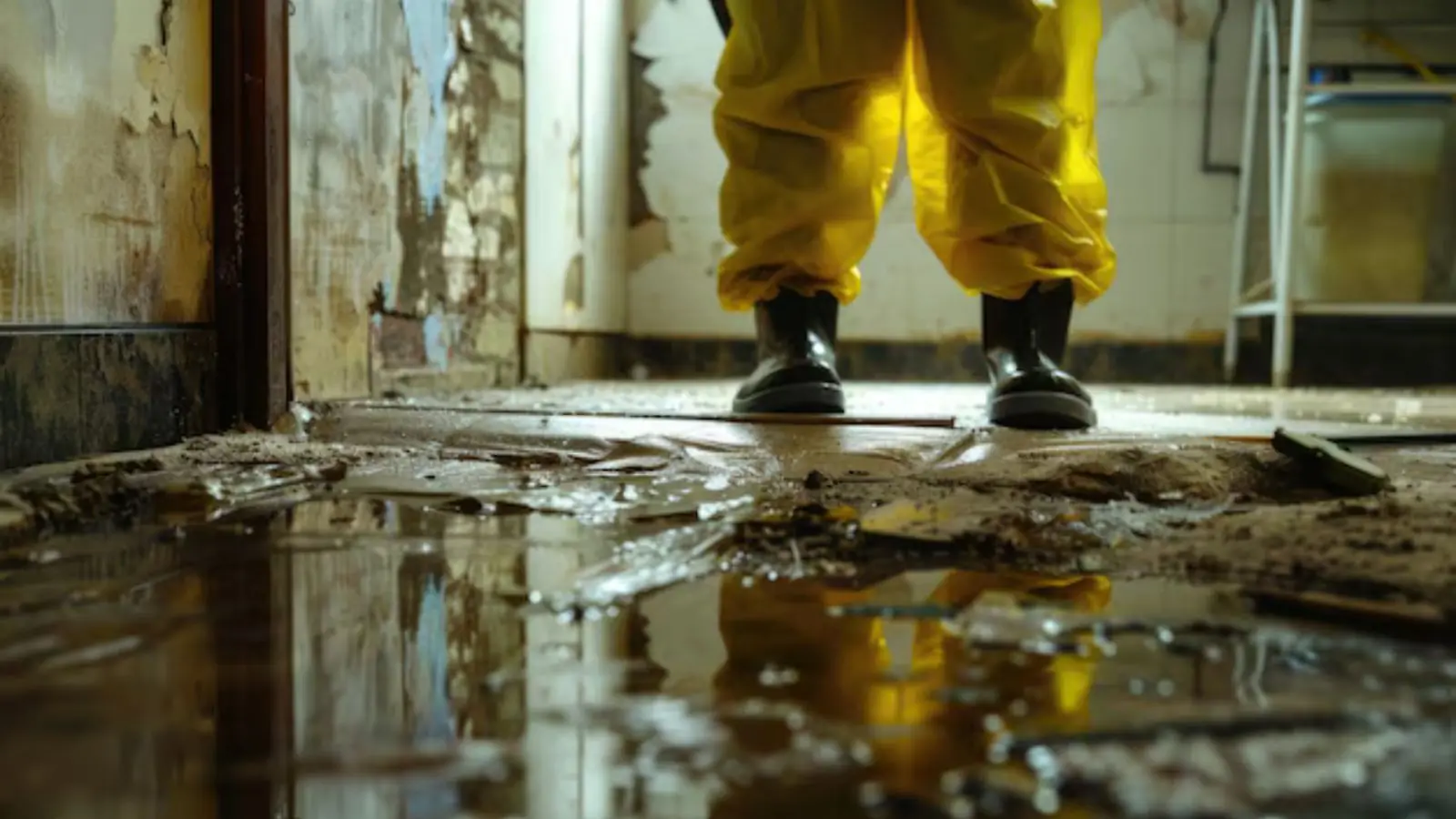
Raw sewage is coming up the basement drain
Stay out of the affected area, keep children and pets away, and stop using every sink, toilet, shower and washer in the house. Sewage water is Category 3 under the ANSI/IICRC S500 standard, which means it is treated as grossly contaminated from the moment it surfaces. Cleanup is a job for protective gear and proper disinfecting, not a bucket and a towel.
If the water is near outlets, the panel or a gas appliance, that comes first. Then the safest move is to call a water damage cleanup crew and let them scope the job.
Electrical and gas come before cleanup
If water is touching outlets, the panel, or you smell gas, leave and call 911 or your utility first. Turn off power at the main panel only if the panel is dry and you can reach it without stepping through water. If you cannot, do not try. Then call (385) 988-9410.
What you can do while you wait for a crew
These steps limit the spread without touching anything contaminated.
Homeowner steps, in order
- Stop adding water. Do not flush, run the dishwasher or start laundry. Every gallon you send down the line can come back up the same drain.
- Keep everyone out. Close the basement door if you can. Pets and kids track contamination upstairs.
- Ventilate only if it is safe. Opening a window or a walkout door helps with odor. Do not run a household fan across the sewage, because it throws droplets around.
- Photograph before anything moves. Take wide and close photos of the water line, the drain and damaged items. You will want them for the claim.
- Lift only what is clean and dry. Do not carry soaked boxes or rugs upstairs. They are contaminated and can spread it through the house.
- Call the 24/7 line. Say where the water came from and how far it has spread. A crew lead explains the next steps and the scope before work starts.
Why sewage water is classed as Category 3
The S500 standard sorts water by contamination: Category 1 is clean supply water, Category 2 is gray water with some contamination, and Category 3 is black water. Sewage that backs up from a drain is Category 3 whether it looks dark or surprisingly clear, because it carries bacteria and other organisms that you cannot see.
That label drives the whole job. It decides what protective gear the crew wears, which materials can stay, and what disinfectant and cleaning steps are required before drying even starts.
What gets removed and what gets cleaned
Porous materials soak up contaminated water and cannot be made safe by wiping. Hard, sealed surfaces can be cleaned and disinfected.
| Material | Usual outcome | Why |
|---|---|---|
| Carpet and pad | Removed and discarded | Fibers and foam hold contamination below the surface |
| Drywall and insulation | Cut out above the water line | Paper and fill wick water upward and cannot be disinfected |
| Upholstery, mattresses, cardboard | Discarded | Soft and absorbent, no reliable way to clean them |
| Unfinished wood framing | Cleaned, disinfected and dried | Dense enough to clean, but moisture readings must confirm it dries |
| Concrete slab | Cleaned, disinfected and dried | Hard and sealed surfaces clean better than porous ones |
| Tile, sealed hard surfaces | Cleaned and disinfected | Non-porous, so the contaminant stays on the surface |
Final decisions depend on how long the materials were wet and how far the water reached. A crew confirms with moisture meters and a walk-through.
Protective gear and sanitizing, in plain words
A crew working a sewage loss wears waterproof gloves, boots, eye protection, disposable coveralls and a respirator. Splash and aerosol are the exposure routes, and the gear blocks them.
The sequence is removal first, then extraction of standing water, then cleaning of the surfaces that stay, then an antimicrobial applied to them. Only after that does drying equipment such as air movers and dehumidifiers go in.
Not sure how far it spread?
Call (385) 988-9410 and describe the drain, the water and the rooms affected. A crew lead walks you through next steps and the scope and price are explained before any work starts.
Who is responsible for the sewer service line
Where the city's responsibility ends and yours begins differs by town. For Payson, ask Payson City Public Works where the city main ends and your service line begins.
The rule is not the same next door. In Spanish Fork, the city maintains the main to the property line, and the homeowner is responsible from there to the building. A plumber with a camera can show where the blockage is. Restoration cleans up the loss, but it does not clear or repair the line.
Payson's sewer system and your drain
Payson City Public Works runs the city sewer for about 6,300 connections, and the treatment plant also serves Elk Ridge and Woodland Hills. If neighbors in Salem or Woodland Hills report the same slow drains, the blockage may sit in a shared main rather than your line.
That is the reason to call Public Works early, before you pay for a line repair. If it is a city main problem, they need to know. If crews tell you it is on your side, you have a documented reason to call a plumber and your insurer.
Source type: Payson City Public Works information (city site)Insurance and drain backup coverage
Sewer and drain backup is often excluded from a standard homeowners policy and covered only through an added endorsement. Ask your insurer whether you have one and what the limit and deductible look like. The Utah Insurance Department's consumer guidance advises documenting damage with photos, keeping a call log and keeping receipts for temporary repairs.
We help with the paperwork side by providing photos, moisture readings and an itemized scope of work.
Mold follow-up after a sewage loss
Mold needs moisture, so it becomes a risk when wet materials stay wet. EPA guidance says to dry wet materials within 24 to 48 hours, and sewage or floodwater jobs fall on the side where EPA recommends professionals. Fast removal of porous materials is the main protection.
If mold shows up later, remediation follows the ANSI/IICRC S520 standard, and testing and clearance are separate decisions. Our mold remediation page explains how that works, and the water source has to be fixed first. For health questions, ask a physician.
Sewage backup questions
Very small surface spills on hard floors are sometimes handled by homeowners with proper gloves, boots and eye protection. EPA guidance says larger sewage and floodwater jobs call for professionals.
If the water reached carpet, drywall or more than a small area, call a crew. Porous materials must be removed, not scrubbed.
Many families stay in the upper floors if the basement is isolated and the electrical and gas are safe. Keep the basement closed off and avoid tracking anything upstairs.
If there is any sign of gas, water near the panel, or the water has spread widely, leave and call 911 or the utility.
Only if the panel is dry and you can reach it without standing in water. If you cannot, call 911 or the utility and stay out.
Never wade into water to reach a breaker.
Ask Payson City Public Works where the city main ends and your service line begins. That boundary decides who fixes a blockage in the line.
A plumber's camera inspection can show where the problem sits, and the photo or video record helps in either conversation.
Often only with a sewer or drain backup endorsement. Ask your insurer what your policy covers.
Carpet, pad and wet drywall are removed and discarded. Sealed hard surfaces and framing are cleaned, disinfected and dried.
Raw sewage in the basement right now?
Call (385) 988-9410, any hour. After the call, keep everyone out and stop using drains until a crew lead walks you through next steps.