
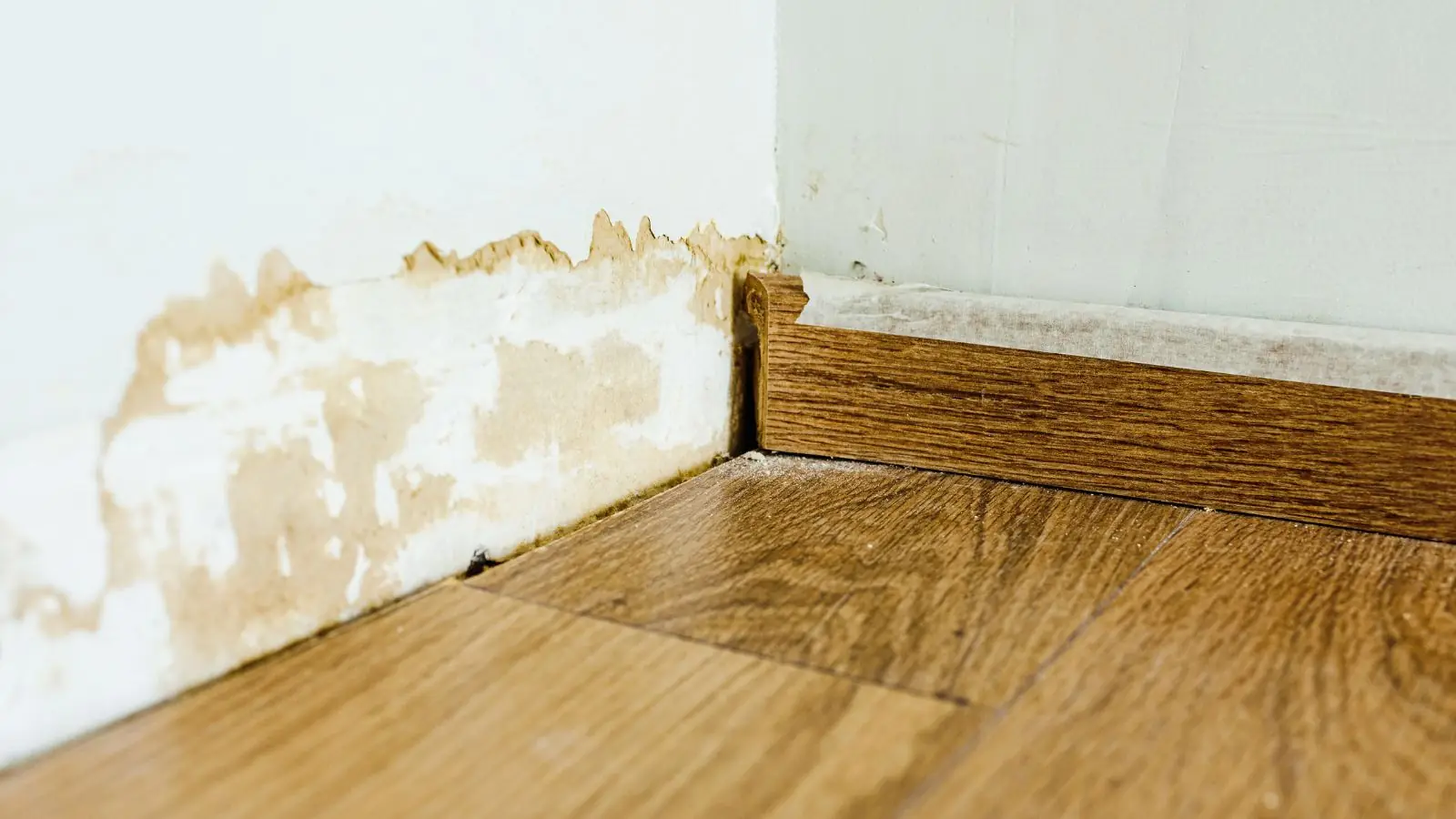
What water damage in a wall usually looks like
The most common signs are a brown or yellow stain, paint that bubbles or peels, baseboards that warp or pull away, drywall that feels soft or crumbles, and a musty smell that does not go away. Any one of these can have another cause. Two or three together, especially near plumbing, point strongly to moisture inside the wall.
Water behaves quietly inside walls. It travels along pipes and framing, so the stain you see is often not where the leak is. Start with the checklist below, then use the simple tests that follow to confirm before you open anything.
The signs, one by one
Walk the house with a flashlight, in daylight and again at night when side light shows ripples in the paint.
Wall water damage signs
- Stains. Tan, yellow or brown patches, sometimes with a darker ring at the edge. A ring means the area has been wet more than once.
- Bubbling or peeling paint. Moisture pushes paint off the surface from behind. Wallpaper seams lifting is the same clue.
- Warped or loose baseboard. Wood and MDF swell when wet. Gaps at the floor line and trim that curls are worth a closer look.
- Soft or crumbly drywall. Press gently with a thumb. Good drywall resists, damaged drywall gives or powders.
- Musty smell. A damp, earthy odor in a closed room often means moisture without visible wetness.
- Sounds. Dripping or hissing behind a wall when nothing is running points to a pressurized line.
- Rising water bills. A bill that climbs with no change in use suggests a hidden leak somewhere on the supply side.
How to check a suspect wall yourself
A flashlight held flat against the wall shows bulges and ripples. A screwdriver pressed lightly into a baseboard or the bottom of a stained wall tells you whether the material is firm. If the tip sinks in easily, wood or drywall has lost strength.
Feel the wall with the back of your hand. Cold, damp patches matter, especially on an outside wall in winter. Then check the other side of the wall, since the leak may be in the next room.
Do not cut large holes to look. You can make the problem bigger, and you may open a wall near wiring. If the clues are strong, stop here and move to the next step.
What a moisture meter and thermal camera add
A moisture meter reads how much water is in a material, and compares it to a dry reference from the same house. A thermal imaging camera shows temperature differences that can mark wet areas behind the surface. Neither tool sees through walls, but together they narrow the search and avoid unneeded demolition.
The thermal camera is a screening tool. Readings from the moisture meter confirm what the camera suggests, and a pin probe can check specific spots. This is how a restoration crew builds a moisture map. Our water mitigation work page explains how that map guides the drying plan.
Not sure what is behind the wall?
Call (385) 988-9410. Describe what you see and a crew lead walks you through next steps. Calls are answered 24/7.
Where leaks hide, and the clue to look for
The source is rarely where the stain is. These are common spots.
| Location | Typical cause | Clue to look for |
|---|---|---|
| Bathroom walls | Shower valve, tub overflow or toilet supply line | Soft baseboard, loose tile grout, stain on the room next door |
| Laundry room | Washer supply valve or drain hose | Warped floor trim, musty closet, drip sounds |
| Refrigerator wall | Ice-maker or water line | Floor staining near the fridge, bubbles at the base of the wall |
| Under sinks | Supply line or drain trap | Dark cabinet floor, swollen panel, odor |
| Roof and siding intersections | Flashing or sealant failure | Stains high on an exterior wall, worse after storms |
Payson's older homes and what hides in their walls
Census ACS data for 2019 to 2023 shows about 36 percent of Payson homes were built before 1980, about 18 percent before 1960, and about 10 percent in 1939 or earlier. Older houses often have decades-old supply lines, older drain materials and plaster or older wall finishes, all of which can hide a slow leak.
If you own a pre-1980 home, treat a small stain as a reason to look sooner. Ask a plumber about the age and condition of your lines. Wall materials in older houses can also behave differently, so a repair plan should start from what the wall is actually made of.
Source type: U.S. Census Bureau American Community Survey, 2019-2023 five-year estimatesWhat to do next
Find the source and stop it. For a supply leak, shut off the water to the fixture or the main valve. For a roof or siding leak, a temporary cover may help until repair. Then photograph the damage, since you may want it for a claim.
Dry the area. Open the wall only as needed and use fans only if the air is clean and the source is stopped. A clean-water leak found early can sometimes be dried in place. Material that stayed wet long enough is often removed and replaced. Our water damage repair service page covers the rebuilding stage.
When it is an emergency
Water near outlets, a bulging ceiling, sagging drywall or a pipe that is actively spraying is an emergency. Shut off the main valve, keep people away from wet areas near electrical panels, and call 911 for any electrical, gas or fire risk before calling us.
When mold may follow
EPA guidance says to dry wet materials within 24 to 48 hours to prevent mold growth, and that moisture control is the key to mold control. A wall that has stayed damp for days is where mold may start, usually on the back side of drywall where you cannot see it.
Mold needs moisture, so the leak has to be fixed first. If you suspect mold, see our mold remediation page. Testing and clearance are separate decisions, and health questions belong with a physician.
Nearby homes, same signs
Homeowners in Springville with older houses, and those near Santaquin with newer ones, see the same early signs. The causes differ more than the symptoms.
Frequently asked questions
Sometimes. Clean-water leaks found quickly can often be dried in place, but drywall that stayed wet, sagged or softened is usually replaced. Moisture readings decide.
Press a finger on it and check with a moisture meter if you have one. A damp, cool or soft stain is active. A dry, ringed stain may be old but can return if the source remains.
If it persists and you cannot find a cause, yes. Moisture may be hidden. Describe it when you call and we explain the next step.
Not until the source is stopped and the wall is dry. Paint hides the stain but traps the moisture problem.
It depends on the work. Ask the Building Division at Payson City Development Services whether your repair needs a permit.
They can be, because about 36 percent of homes here were built before 1980 and older lines and finishes age. Age alone does not mean a leak, so check the signs and ask a plumber about your pipes.
Think there is water in the wall?
Call (385) 988-9410 and describe what you see. Scope and price are explained before work starts.