
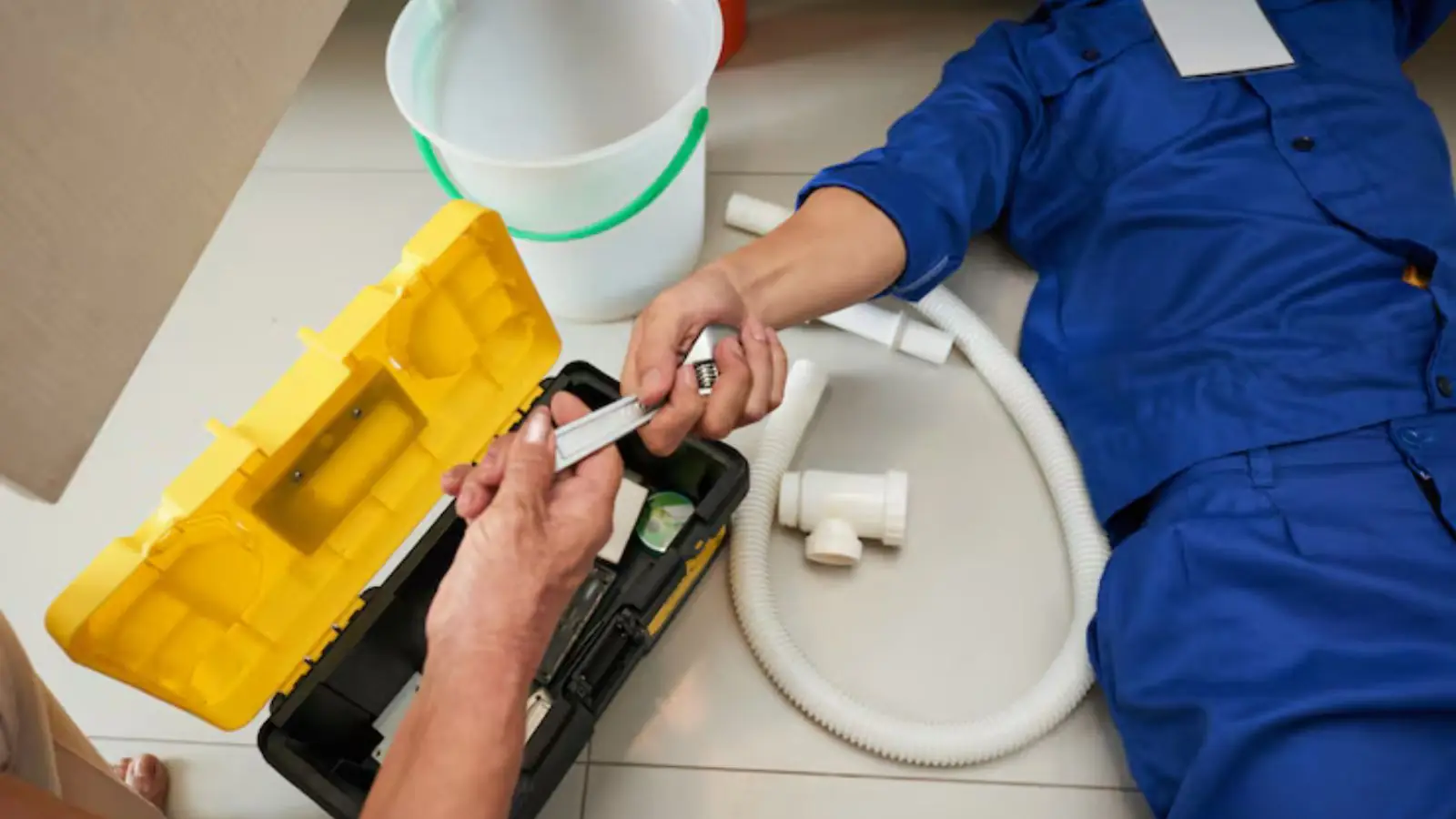
Stop the water, then start drying
A failed washer hose can pour a full tub's worth of water onto the floor in a short time, so the first move is at the wall. Turn both supply valves, hot and cold, clockwise until they stop. If a valve is frozen or leaks when turned, close the home's main water valve and unplug the washer if the outlet is dry.
Then get the standing water up with towels, a wet vacuum or a mop, and lift the washer's contact points off the floor if you can do so safely. Moisture that sits under flooring is the real problem. EPA guidance says to dry wet materials within 24 to 48 hours to head off mold. Call (385) 988-9410 if water has reached beyond the laundry room.
Why washer hoses fail
Most washers connect with rubber or braided stainless hoses that stay under pressure all day, even when the machine is idle. Rubber hoses crack and bulge with age. Braided hoses have a metal sleeve, but the rubber liner inside can still fail at the coupling, and the sleeve hides the warning signs.
Look at the connections for crust, rust, drips or a hose that looks swollen. Check the date stamped on the hose if there is one, and replace old hoses before they fail. Many homeowners also close both valves when they leave for a trip, a simple habit that takes seconds.
Do not run the washer again until the hose is replaced and the floor is checked. Skip the household vacuum on wet carpet, and keep space heaters away from damp flooring.
Drain pans and leak sensors under the washer are cheap protection. They will not stop a failed hose, but they can warn you while the water is still on the pan.
What to dry and what to remove
Materials react differently once soaked. This is the usual pattern after a clean supply-line leak.
| Material | Usually dried | Often removed |
|---|---|---|
| Tile or sheet vinyl on slab | Surface and joints dried | Loose or lifting pieces |
| Solid hardwood | Dried with panel mats if caught early | Cupped or buckled boards that stay distorted |
| Laminate or engineered wood | Rarely salvageable once edges swell | Swollen planks, usually |
| Carpet and pad | Carpet may dry in place | Pad is often removed |
| Drywall and baseboard | Dried if wet only at the base | Sections that stay soft or stained |
| Subfloor and framing | Dried with air movers and dehumidifiers | Only if it stays wet or delaminates |
A moisture meter and a thermal imaging camera confirm what is wet before anything is removed.
Hardwood, subfloor and what is under the laundry room
Water from a washer rarely stays where it lands. It runs to the lowest point, slips under baseboards and seeps between boards into the subfloor. Hardwood cups as the bottom swells before the top, and the change can show up a day or two after the leak.
Professional drying uses air movers, LGR or desiccant dehumidifiers and sometimes drying mats to pull moisture out of flooring. Crews take readings daily and compare them to a dry reference. If a laundry room sits above a finished basement, water can reach the ceiling below, so check there too. Our water mitigation work is built around that daily measure-and-dry cycle.
Washer leak soaked the floor?
Describe what you see and a crew lead walks you through next steps, with scope and price explained before work starts. Call (385) 988-9410.
When mold risk starts
EPA guidance says to dry wet materials within 24 to 48 hours, because mold needs moisture to grow. That is a guideline, not a switch that flips at hour 49. Warm, closed spaces like a cabinet under a utility sink or a closet behind a washer stay damp longer.
If a musty smell shows up, or you see dark spots on baseboards or the wall behind the washer, the moisture is still there. Small, recent patches may be a cleanup. Larger or recurring growth needs a plan under the mold remediation process. Questions about mold and your health belong with a physician.
What the age of Payson homes means for supply lines
Census ACS 2019-2023 figures show about 36 percent of Payson homes were built before 1980, while the median home was built in 1994. So many houses have had their laundry plumbing touched at least once, and plenty of others still carry older supply lines and valves.
If your home predates the 1990s, check the washer valves for corrosion and stiffness. Valves that have not been turned in years can seize or drip when you try to close them. Exercise them gently once a year, replace the hoses on a schedule, and learn where the main shutoff is before you need it.
Source type: U.S. Census Bureau American Community Survey, 2019-2023 estimatesDocument the leak for a claim
Sudden and accidental water damage is often covered, while a slow, ongoing drip often is not. Check your policy and ask your insurer. The Utah Insurance Department's consumer guidance advises documenting damage with photos, keeping a call log and keeping receipts for temporary repairs.
Photograph the hose, the valves, the wet floor and every damaged item before you move it. Keep the failed hose. Our water damage cleanup crews help with moisture readings, drying logs and an itemized scope. If you live nearby, we also serve Spanish Fork and Salem.
Washer leak questions
Turn off both the hot and cold supply valves on the wall behind the machine. If either one will not close, shut the home's main water valve and call a plumber.
They are stronger than plain rubber, but the inner liner and the couplings can still fail. Inspect them yearly and replace them on a schedule.
It depends on how long it stayed wet and how much moisture got underneath. Early drying often saves it. Boards that cup or buckle and do not flatten after drying may need replacing.
That is a gamble. Subfloor under flooring dries slowly without airflow, and trapped moisture invites mold. Meter readings tell you whether it is dry.
Older valves and supply lines tend to be stiffer and more corroded. About 36 percent of Payson homes were built before 1980 per Census data. If yours is one of them, test the valves and replace old hoses.
Yes, we assess the unit and can document damage for you and for the property manager. Call (385) 988-9410 and describe the layout.
Laundry room flooded in Payson?
Calls are answered 24/7 and we offer same-day response when available. Call (385) 988-9410.