
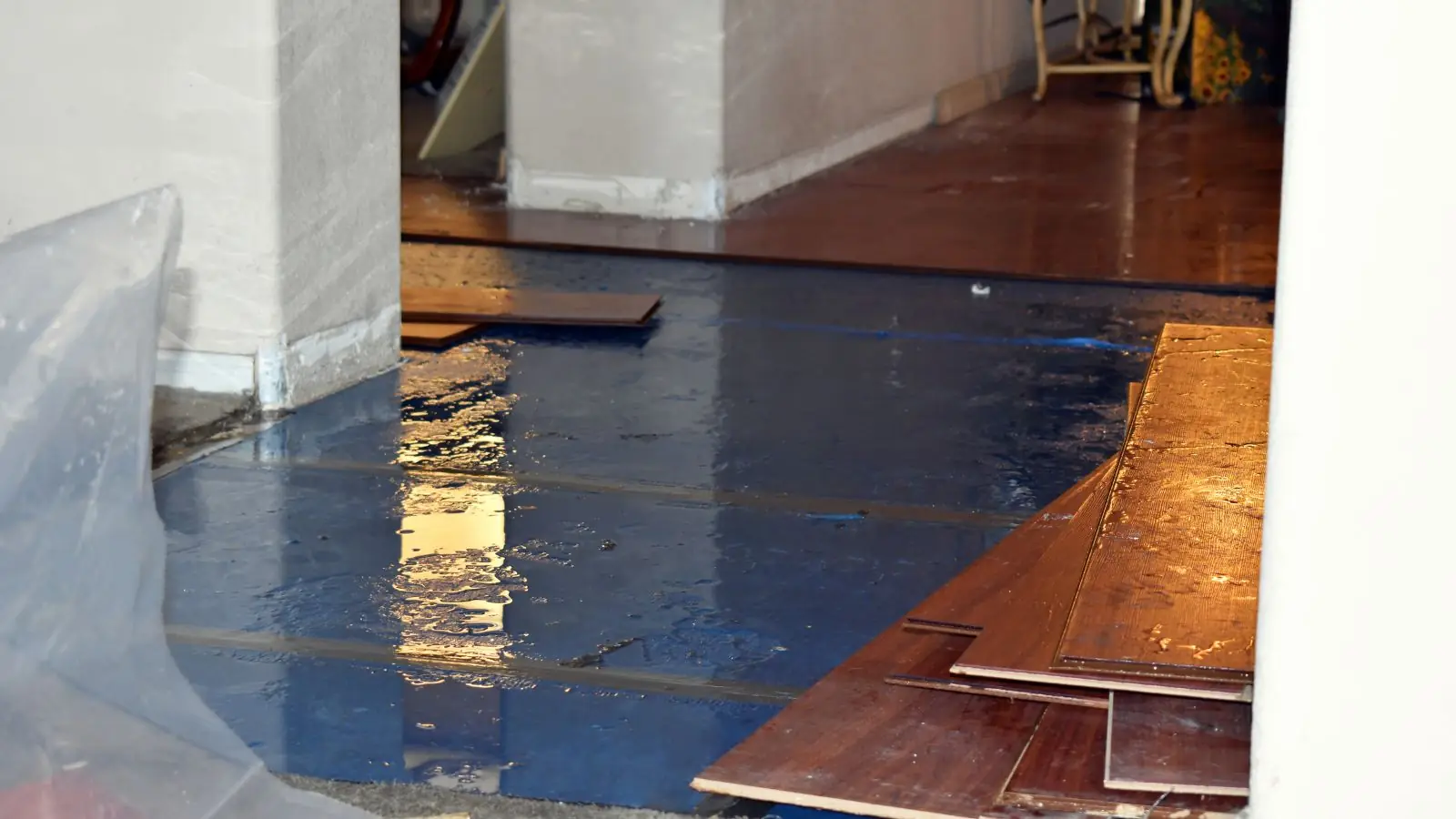
Dry it, repair it or replace it
If the water was clean, caught early and the floor is solid wood or tile, drying often works. If the floor is laminate, soaked carpet pad or anything that swelled and delaminated, replacement is usually the honest answer. The material and the time it stayed wet decide, along with what the subfloor underneath reads.
EPA guidance says to dry wet materials within 24 to 48 hours to prevent mold growth. That window is why fast action matters more than any product you buy. Everything below is organized around that clock.
Decision table by floor type
Use this as a starting point. Moisture readings on site make the final call.
| Floor type | Often dry in place | Often replace |
|---|---|---|
| Solid hardwood | Caught quickly with clean water, mild cupping, drying equipment | Deep cupping that stays after drying, black staining, soaked boards for days |
| Engineered hardwood | Light surface wetting, wiped and dried fast | Veneer lifting, swelling at edges, delaminated layers |
| Laminate | Rarely, only a thin wetting | Swollen edges and seams, fiberboard core that has expanded |
| Vinyl plank | Often, if water did not get under it | Water trapped under the planks, lifting seams, odor |
| Tile | Usually, with the subfloor and grout checked | Loose tiles, cracked grout over a wet subfloor |
| Carpet over pad | Clean water, carpet lifted and dried fast | Pad is usually replaced, and carpet if sewage or long wetting |
Sewage or other category 3 water changes this table. Porous materials are generally removed.
Cupping and crowning in plain words
Cupping is when the edges of a board rise higher than the center, so the board looks like a shallow dish. It happens when the bottom of the board absorbs more moisture than the top. Crowning is the opposite, with the center higher than the edges. It often shows up after a floor is sanded while still wet or after cupping gets over-corrected.
Both can ease as the wood dries. Do not sand or refinish until moisture readings return to a normal level, usually compared with a dry reference in an unaffected part of the house. Sanding too soon locks in problems.
Why the subfloor matters
A floor can look dry on top while the subfloor stays wet. Plywood, OSB and concrete slab each hold water differently, and a damp subfloor can cup new flooring or feed mold. That is why we measure, not guess.
Moisture meters give readings in the flooring and the subfloor. We compare them with a dry reference from the same house and keep a daily log. Thermal imaging cameras help find wet patches under the surface. Our water mitigation service page explains the full drying setup, including air movers and dehumidifiers.
Floors wet and unsure what to do?
Call (385) 988-9410. Describe what you see and a crew lead walks you through next steps. Calls answered 24/7.
A washing machine valve breaks
This is a common way to wreck a hardwood floor. A supply valve or hose lets go, and water runs for minutes or hours before anyone notices. It spreads under cabinets, into baseboards and into the subfloor.
Shut off the valve or main. Pull up area rugs and get photos. Extract standing water, then dry the floor and walls. Hardwood near a laundry room often shows cupping within days, so call right away if boards begin to lift. Our emergency water removal page covers the extraction stage.
An HVAC condensate line backs up
A clogged condensate line sends water over the drain pan and into the closet, ceiling or floor below. It often leaks slowly, so the damage can be on the floor for days. Carpet and the pad take the brunt, and wood trim wicks the water up.
Fix the clog or have an HVAC technician clear it, then dry the area. If a closet floor feels spongy or smells musty, check for hidden moisture before laying anything new. A repeat leak points to a line that needs a proper fix.
What to do in the first day
These steps hold for most floor types.
Wet floor steps
- Stop the source. Close the valve, fix the line or cover the roof.
- Make it safe. Stay out of standing water near outlets and the panel.
- Photograph the damage. Take photos and video before anything is moved.
- Lift what you can. Move furniture, rugs and electronics off the wet area.
- Remove standing water. Mop or use a wet vacuum for small amounts, or call for extraction.
- Get air moving only when the water is clean. Fans on sewage-contaminated areas spread the problem.
- Call for readings. Moisture meter readings tell you what is wet beneath the surface.
When replacement is the honest answer
Replace the floor when the material swelled and will not return, when sewage soaked it, when the subfloor stayed wet long enough to weaken or smell, or when drying would cost more than new material. A contractor who tells you everything can be saved is not looking at readings.
Replacement is not a failure. Dry the structure first so the new floor sits on a sound subfloor. Our water damage repair page explains how rebuilding follows the drying, and a permit question goes to the Building Division at Payson City Development Services.
Irrigation season, basements and newer homes
Payson City runs a separate pressurized irrigation system that operates roughly spring to fall. Lawn and garden watering during that season can put extra moisture near foundations, window wells and basement slabs, so a floor that feels damp at the wall may be a drainage issue as well as a leak.
Census ACS data (2019-2023) gives Payson a median year built of 1994, which means many homes have newer construction and finished basements. Finished basement floors sit over a slab, so if moisture keeps returning check the exterior drainage. Restoration is not waterproofing, and that job belongs to a waterproofing contractor.
Source type: Payson City Public Works (city site) and U.S. Census Bureau American Community Survey, 2019-2023Homes in nearby towns
The same questions come up in Santaquin, where much of the housing is recent, and in Springville, where older homes mix with newer ones. The floor type matters more than the town.
Frequently asked questions
Sometimes. Clean water, quick extraction and proper drying can save solid hardwood, but deep cupping or long wetting may mean replacement. Readings decide.
It varies by material and moisture. We log readings daily and dry until they match a dry reference, so no fixed number applies.
Clean-water carpet can often be dried, but the pad is usually replaced. Sewage-contaminated carpet is generally removed.
Cupping can ease as wood dries, but give it time and avoid sanding too early. Check readings before deciding.
Not always. Trapped water shows as odor, lifting seams or a soft spot. A moisture meter or thermal camera can confirm.
It can add moisture near foundations and window wells during the season the pressurized irrigation system runs, roughly spring to fall. That is a drainage matter, so ask a waterproofing contractor.
Want your real number for the floor?
Call (385) 988-9410. Scope and price are explained before work starts.