
What to do in the first few minutes
Shut the cold water supply valve on the pipe feeding the top of the heater. It is usually a lever or round wheel handle. Turn the lever a quarter turn across the pipe, or the wheel clockwise until it stops. That stops fresh water from refilling the tank and feeding the leak.
Next, cut the energy source, but only if you can do it without standing in water. Electric heaters get switched off at the breaker. Gas heaters have a control knob you can turn to off. If you smell gas, do not touch anything. Leave, then call 911 or your gas utility from outside.
Once the source is controlled, move valuables, call a plumber for the heater itself, and call us at (385) 988-9410 for the water on the floor.
Step by step, in order
Work through these only as far as it is safe to go.
Leaking heater checklist
- Look before you step. If water is near outlets, a panel, or an electric heater's wiring, stay out and shut power from a dry spot or call for help.
- Close the cold supply valve. Find it on the inlet pipe above the heater. If it will not turn, shut the home's main water valve instead.
- Turn off power or gas. Breaker for electric, control knob for gas. A gas smell means leave and call 911 or the utility.
- Open a hot tap upstairs. This lets the tank drain slightly and relieves pressure. Hot water can scald, so keep children and pets away.
- Photograph everything. Capture the heater, the label, the wet areas and any stored items before you move them.
- Lift what you can. Boxes, rugs and furniture legs soak up water quickly. Get them onto dry surfaces.
- Call for extraction. The faster standing water is out, the less reaches drywall, baseboard and subfloor.
Safety first
Water and electricity do not mix. If the leak is near the electrical panel, outlets or an electric heater's junction box, call 911 or your utility before calling us. Never wade through standing water to reach a switch.
Where is the water coming from?
The source tells you whether this is a repair or a replacement.
| What you see | Likely meaning | Typical next step |
|---|---|---|
| Drip from the pipe at the relief valve | Pressure or temperature relief is releasing, or the valve is worn | Plumber inspects the valve and system pressure |
| Water at the top fittings | Loose or corroded supply connections | Plumber tightens or replaces the fittings |
| Pooling under the tank, steady | Tank body may have failed | Shut off supply, plan on replacement |
| Damp around the base of a gas unit | Could be condensation or a slow leak | Plumber checks before you rely on it |
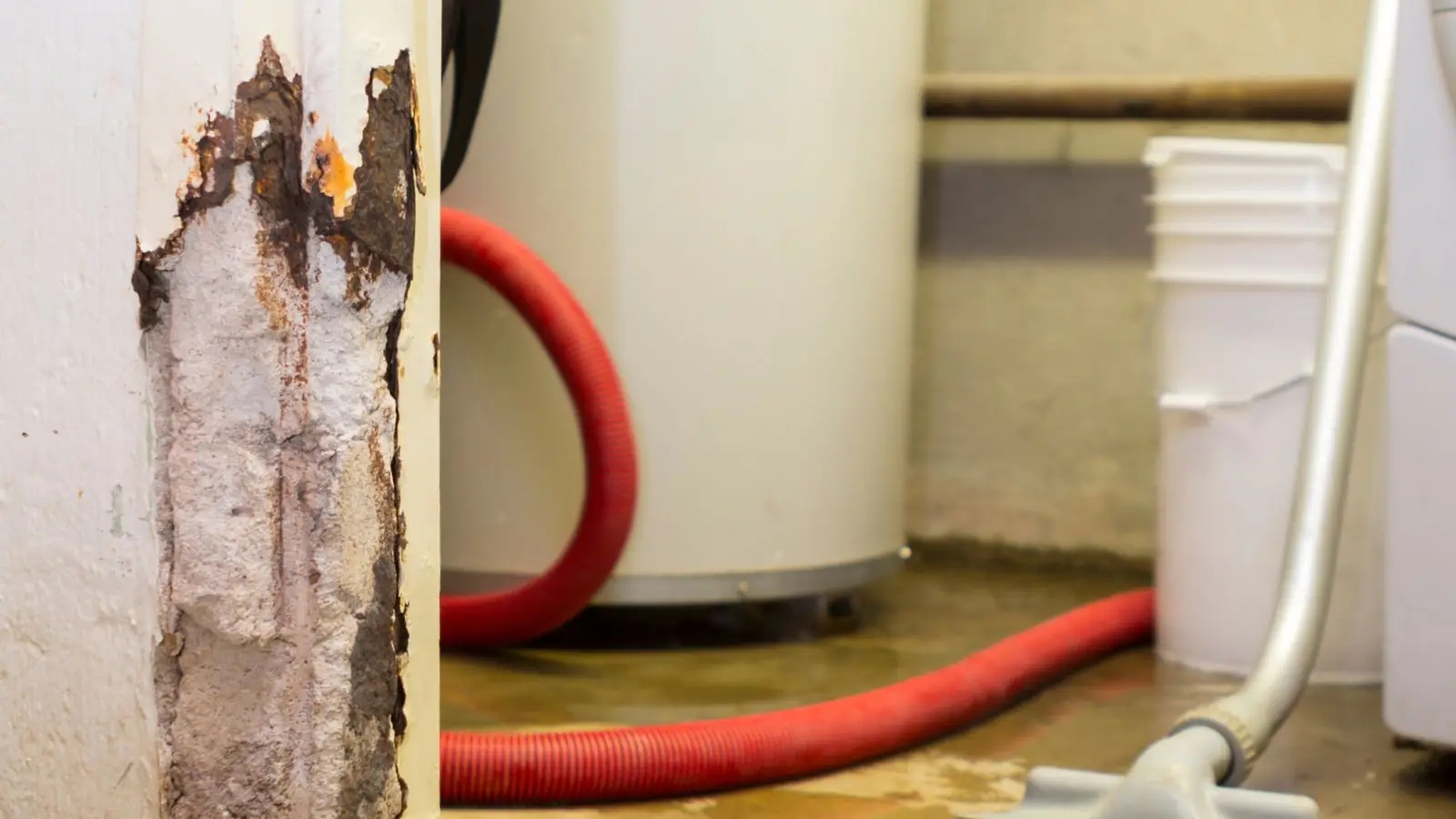
| Rust-colored water at the base | Corrosion is advanced | Replacement is likely, dry the area now |
These are general patterns. A licensed plumber makes the call on your specific unit.
Draining the tank and extracting the water
You do not have to drain the whole tank to stop a leak. Closing the supply valve already starves it. A plumber may drain it for repairs, using a hose to a floor drain or outdoors, and the water will be hot at first.
Water on the floor is a different job. Extraction units pull standing water out of carpet, pad and hard floors. Then air movers and LGR or desiccant dehumidifiers dry the structure, and moisture meters tell the crew when it is dry. Under S500 vocabulary, a supply-line leak starts as category 1, clean water. It can slip to category 2 if it sits, soaks through materials or picks up dirt, so speed matters.
What usually gets wet around a water heater
Heaters often sit in a garage, utility room or closet, so the water reaches different things in each. In a closet it wicks into the bottom of the drywall and baseboard. In a garage it spreads over slab and into stored boxes. In an upstairs closet it can travel down through the floor into the ceiling below.
Check the base of nearby walls, insulation, carpet pad, flooring edges and anything cardboard. Our water damage cleanup work covers drying and removing what cannot be saved, and the emergency water removal page explains how crews handle active water.
Water still spreading from your heater?
Calls are answered 24/7 and we offer same-day response when available. Call (385) 988-9410.
Know where your main shutoff is
Payson City Public Works supplies culinary drinking water to about 6,700 connections, so most homes in town have a city service line feeding a main valve inside or near the house. Finding that valve now, before a leak, turns a panic into a quick task.
Walk your home and label the main shutoff and the heater's cold supply valve. If a valve is stuck or the city side seems to be the problem, ask Payson City Public Works what they can do, and keep a plumber's number handy.
Source type: Payson City Public Works websiteWho to call, and in what order
A plumber fixes or replaces the heater. A restoration crew dries the structure. You often need both, and the water should not wait on the plumber's schedule. The same two-step approach applies if you live in Santaquin or Springville, both of which we serve.
For a claim, sudden and accidental water damage is often covered, while a slow leak or neglect often is not. Check your policy and ask your insurer. We help document with photos, moisture readings and an itemized scope. Do not throw the old heater out before the adjuster sees it.
Water heater leak questions
If you can reach both safely, close the cold supply valve first because it stops new water. If the wiring is wet or you must step through water to reach a breaker, stop and call 911 or the utility.
Treat it as urgent. A slow drip can soak a wall base for days without being noticed. Shut the supply valve, put a pan under it, and have a plumber look at it soon.
Look where the water line enters the house, often a basement, utility room, garage or an exterior wall. Payson City Public Works supplies the culinary water, so ask them about the service connection if you cannot find or close your valve.
For a small spill on a hard floor, yes. If water reached drywall, insulation, carpet pad or a subfloor, fans alone often leave moisture trapped. Mold needs moisture, and EPA guidance says to dry wet materials within 24 to 48 hours.
Sudden and accidental damage is often covered, while gradual leaks often are not. Whether the heater itself is covered depends on your policy. Ask your insurer before you throw anything away.
Yes. Extraction works on slab, carpet, tile and subfloor. Call (385) 988-9410 and describe the room.
Heater leaked and the floor is wet?
Describe what you see and a crew lead walks you through next steps. Call (385) 988-9410.